Locations:





Leader of the heart failure society on why the subspecialty is so dynamic these days
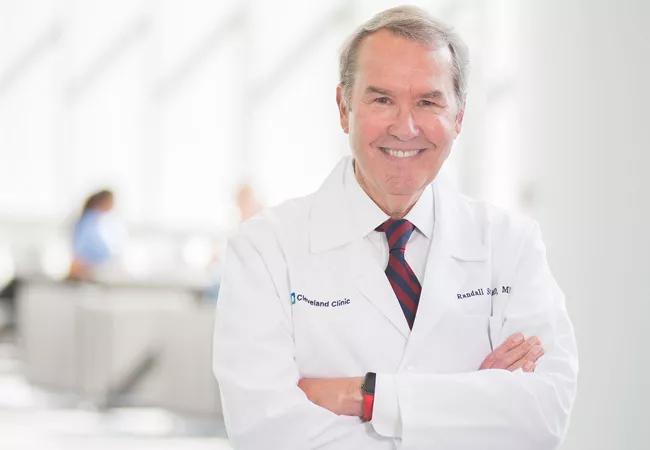
Image content: This image is available to view online.
View image online (https://assets.clevelandclinic.org/transform/546d9918-fa5d-4f11-b6b2-a9413cea30b3/18-HRT-5668-Starling-QA-CQD_jpg)
18-HRT-5668-Starling-QA-CQD
Although heart failure (HF) is today considered largely treatable, it was deemed an end-stage condition as recently as a decade or so ago. That progress is due in no small part to the work of the Heart Failure Society of America (HFSA), a research, advocacy and educational organization that’s been promoting HF awareness and best practices since 1995.
Advertisement
Cleveland Clinic is a non-profit academic medical center. Advertising on our site helps support our mission. We do not endorse non-Cleveland Clinic products or services. Policy
In September 2018, veteran Cleveland Clinic HF cardiologist Randall C. Starling, MD, MPH, FHFSA, assumed the presidency of the HFSA. Consult QD caught up with him to learn about his vision for the society and his take on the state of HF practice.
Dr. Starling: It’s the most exciting, rapidly growing subspecialty in cardiovascular medicine today. We have multiple new therapies, including new left ventricular assist devices (LVADs) with fewer adverse events and improved survival, the MitraClip® device for patients with functional mitral regurgitation, and a variety of new remote monitoring devices that may shape how we care for patients in the future. We also have new medications, such as tafamidis for transthyretin amyloid cardiomyopathy, that are game changers for subsets of patients with HF. The result is a landscape of hope and multiple lifesaving treatments that now, when used by a knowledgeable HF team, can improve quality of life and extend the lives of patients with heart failure. .
Dr. Starling: The HFSA is in a state of high activity and transition. We have a robust agenda executing a new strategic plan, developing a certification process and launching a major research initiative. But the overarching goal of my tenure as president is to expand the footprint of the HFSA and generate collaboration with HF societies around the world.
Dr. Starling: On the membership side, expanding our footprint means becoming more multidisciplinary. HF care is a team effort, so we want to include more nurses, pharmacists, hospitalists, emergency physicians and primary care doctors. Medical professionals will soon be able to take an exam and receive credential certification in HF.
Advertisement
Also, 40 percent of our members are early-career professionals, and we want to tap these members for more leadership roles. This will ensure that we engage future leaders to help the HFSA develop to meet the needs of our membership.
On the international front, we are working to increase global membership and foster more collaboration with peer societies in other countries. In an age of electronic sharing of knowledge, images and databases, greater collaboration only makes sense. So we’re entering into agreements with European, Canadian and Japanese heart failure societies and developing closer ties with our peer groups in South and Central America, Mexico, India and the Middle East. Promoting collaborations for research, patient care and education with our colleagues globally will make everyone better.
Dr. Starling: To build and correctly position HF teams that are skilled at choosing among treatment alternatives. What patients with HF really need is a specialist team with the expertise to make sure they get the right treatment at the right time from the right provider.
Dr. Starling: Survival rates with LVADs are fast approaching those of transplantation. Currently, one-year survival is about 90 percent, and two-year survival is around 87 percent. Published data on the latest LVAD, designed to enhance hemocompatibility, show that it has essentially eliminated LVAD thrombosis and reduced strokes.
Heart transplants have an excellent median survival, around 12 to 13 years. However, once a transplant is performed, the clock starts ticking. Adding a dozen or so years of life may sound pretty good to a 65-year-old patient, but a 35-year-old understandably will hope for more, and an LVAD can offer an interim solution, at the very least.
Advertisement
Dr. Starling: Most patients have many comorbidities that factor into both prevention and treatment of HF, but hypertension remains the leading one. We know that if a patient’s hypertension is treated early, they probably will never develop HF. If untreated, they are likely to die of stroke or HF. To promote early intervention, the latest ACC/AHA/HFSA guidelines incorporate treatment of hypertension and hypertension goals.
I am excited about a new drug class, angiotensin receptor/neprilysin inhibitors (ARNIs), for treatment of HF. The first ARNI drug [sacubitril/valsartan (Entresto®)] has been commercially available for less than four years, but it can extend life substantially. Not only do these agents reduce levels of “bad” hormones that put stress on the heart, as ACE inhibitors do, they also raise levels of “good” cardiac hormones that lower stress and promote healing. Recent research shows that we can start sacubitril/valsartan in the hospital, and we await results of the PARAGON-HF trial, which is examining this agent’s role in HF patients with an ejection fraction of 45 percent or higher.
Dr. Starling: Many referring physicians are unaware of all the opportunities and tools we have to treat HF. My message to them is this: Know what the lifesaving, guideline-directed medicines are, and don’t hesitate to refer a patient to an HF specialist. And if the patient is hospitalized, he or she is at high risk and should follow up with an HF specialist for consultation.
Advertisement
Advertisement

A sampling of outcome and volume data from our Heart & Vascular Institute

Concomitant AF ablation and LAA occlusion strongly endorsed during elective heart surgery

Large retrospective study supports its addition to BAV repair toolbox at expert centers

Young age, solid tumor, high uptake on PET and KRAS mutation signal risk, suggest need for lobectomy

Surprise findings argue for caution about testosterone use in men at risk for fracture

Residual AR related to severe preoperative AR increases risk of progression, need for reoperation

Findings support emphasis on markers of frailty related to, but not dependent on, age

Provides option for patients previously deemed anatomically unsuitable
 Search