Locations:





New, multidisciplinary treatment approach
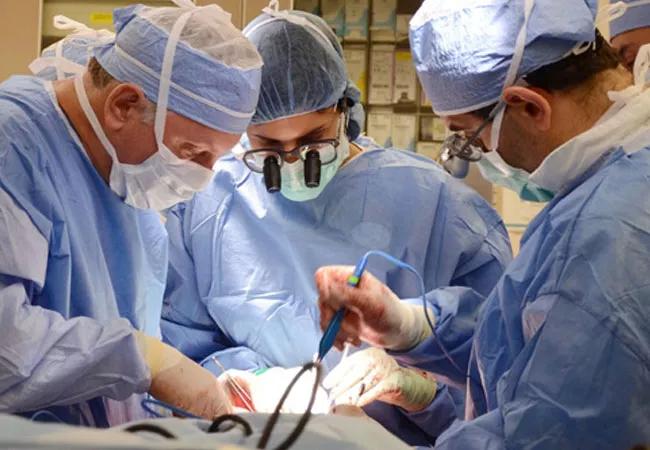
Image content: This image is available to view online.
View image online (https://assets.clevelandclinic.org/transform/a83530f5-f2c9-4bec-8a8f-9d2d74fd3204/19-DPSI-1294-Hero_CQD_650x450_1_jpg)
19-DPSI-1294-Hero_CQD_650x450_1
An individual’s face is one of the most personal features of the body and how they connect with others. Bahar Bassiri Gharb, MD, PhD, a craniofacial surgeon, helps her young patients with cleft lip and palates look, feel and function better. And she’s there to support our patients and their families through all of it.
Advertisement
Cleveland Clinic is a non-profit academic medical center. Advertising on our site helps support our mission. We do not endorse non-Cleveland Clinic products or services. Policy
“A cleft lip associated with cleft palate is one of the most common abnormalities that can impact an individual’s face,” says Dr. Bassiri, Co-director of Cleveland Clinic’s Cleft Lip Palate and Craniofacial Anomalies Clinic. “There are a lot of misconceptions about them. And unfortunately, there is a lot of stigma attached to this condition, but it is treatable.”
Innovations in repair techniques have significantly improved outcomes. At Cleveland Clinic, patients with cleft lip and palates are treated by a team of experts that includes a pediatric plastic surgeon, pediatrician, orthodontist, dentist, speech and language specialist, hearing specialist, otolaryngologist, psychologist, genetic counselor and nurse. The new treatment program offers the latest advances in the field, including naso-alveolar molding. The objective of this comprehensive, multidisciplinary team is to provide an environment of personal attention and collaboration while maintaining the highest level of clinical care and innovative treatments. Surgery restores normal function with minimal scarring. If needed, speech therapy helps correct speaking difficulties and orthodontic treatment helps realign the teeth.
Dr. Bassiri emphasizes open and empathic communication with patients and their families. “By explaining to parents the steps for treatment, the advances of surgery and great outcomes, we are able to alleviate concerns,” she says. “We have created a Facebook group for the families and they can talk to each other from a parent standpoint and seek advice. We post our outcomes and address important issues that can create anxiety in parents. This has been very useful. The families can reach out to me directly. Sometimes you need support in-between appointments and test results. It’s how I would like to be cared for.”
Advertisement
“My family doctor growing up was not empathic. If we were sick, the physician would prescribe us medication and that was that. To be a physician is to take care of an individual from all angles. I feel fulfilled knowing I help people and take care of them when they need care. I get to know my patients as people,” Dr. Bassiri continues.
Advertisement
Advertisement

Here is the awesome subtitle.

Consider secondary syphilis in the differential of annular lesions
Persistent rectal pain leads to diffuse pustules
Techniques are borrowed from rhinoplasty, malar augmentation and others
Two cases — both tremendously different in their level of complexity — illustrate the core principles of nasal reconstruction
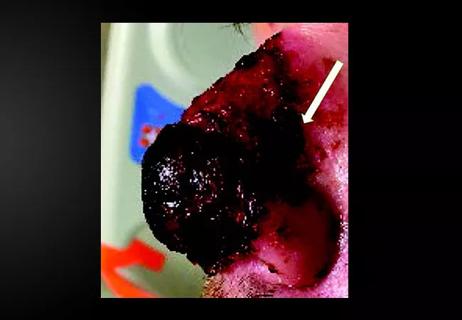
Stress and immunosuppression can trigger reactivation of latent virus
Low-dose, monitored prescription therapy demonstrates success
 Search