Locations:





 Search
Initiative targets patient safety through culture change

Image content: This image is available to view online.
View image online (https://assets.clevelandclinic.org/transform/fcfd797e-be6b-49f4-b9b5-dcf8336b11c0/650x450-Wong_jpg)
Challenging the Status Quo Through Leadership
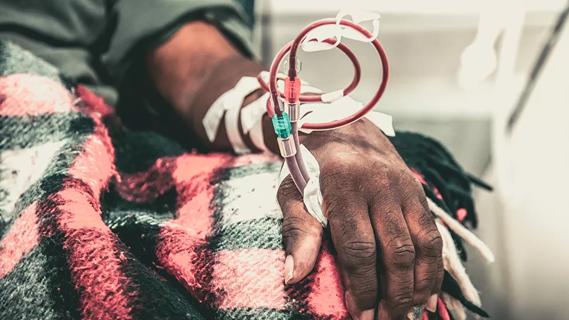
Close to 10 million people worldwide have kidney failure. Despite the critical nature of dialysis and the vast numbers of individuals who receive it, treatment methods have not changed much over time and infection-related deaths remain a problem.
Advertisement
Cleveland Clinic is a non-profit academic medical center. Advertising on our site helps support our mission. We do not endorse non-Cleveland Clinic products or services. Policy
To help counter this trend, the American Society of Nephrology partnered with the U.S. Centers for Disease Control and Prevention to develop the Nephrologists Transforming Dialysis Safety (NTDS) Project to target zero infections in outpatient dialysis facilities.
Leslie Wong, MD, Vice Chair, Nephrology and Hypertension Department, Glickman Urological & Kidney Institute, chairs the Quality, Assessment, Improvement and Education (QAIE) Working Group of the NTDS. The goal is to engage nephrologists to take the lead in the cultural change necessary to transform the current state of infection prevention in dialysis facilities.
Studies have shown that advanced age, diabetes mellitus, hypertension, cardiovascular disease and higher body mass index are associated with chronic kidney disease. The five-year survival rate for dialysis patients is 35.8 percent, compared to 85.5 percent for transplant patients.
Among patients undergoing hemodialysis, hospitalizations for infection increased 43 percent since 1993. Only half of all patients who start hemodialysis are still living three years later, and infections cause or contribute to many of these deaths. In 2017, six of the top 10 citations given to dialysis facilities were related to infection control practices.
“The biggest problem is lack of an effective culture of safety in many dialysis facilities,” says Dr. Wong. “Poor safety culture influences the level of commitment by nephrologists and dialysis staff to prevent dialysis infections.
Advertisement
“This is frequently manifested by deviations from infection prevention policies, staff taking shortcuts in infection control tasks, and fear of punishment that discourages reporting of behavior or errors leading to infections.”
Dr. Wong’s QAIE work group spearheaded several educational initiatives, including the first national webinar, and infection prevention symposia at the ASN Kidney Week meetings in 2017 and 2018. Additional initiatives involve developing educational tools and engaging national dialysis organizations about medical director leadership training and preparedness, the Virtual Mentor Dialysis Curriculum, and support from the CDC Making Dialysis Safer for Patients Coalition.
Cleveland Clinic treats about 560 chronic dialysis patients in 10 hemodialysis facilities and two home dialysis programs. Cleveland Clinic’s dialysis program is managed by Fresenius Kidney Care through the Ohio Renal Care Group and participates in the 5-Diamond Patient Safety Program. The safety program is an online, national educational resource consisting of 18 modules to help dialysis facilities increase awareness of, promote, and build a culture of patient safety.
Advertisement
Advertisement

Clinicians should individualize dosing practices based on patient risk factors and preferences
Pioneering and refining the approach in pyeloplasty, nephrectomy and more
Fully-automated process uses preop CT, baseline GFR to estimate post-nephrectomy renal function
Could mean earlier treatment, but also could have negative effects

Unlike earlier pills, new drugs do not cause liver toxicity

Male factors play a role in about half of all infertility cases, yet men often are not evaluated
Surgeons choreograph nearly simultaneous procedures, sharing one robot between two patients

Identifying barriers in the renal genetic assessment of Black patients