Locations:





Physician-scientist publishes insights in JAMA
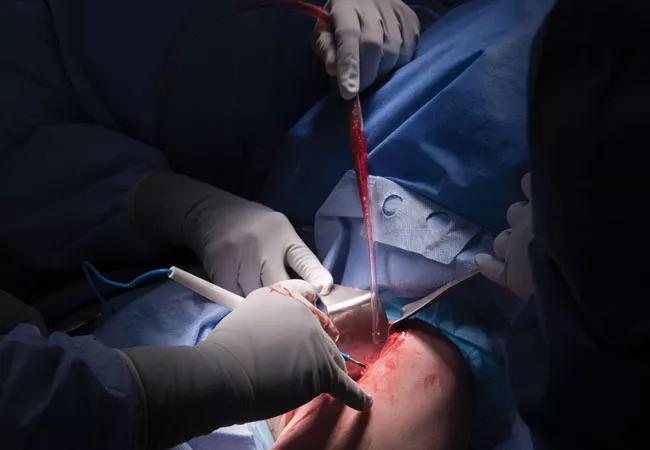
Image content: This image is available to view online.
View image online (https://assets.clevelandclinic.org/transform/fb79df90-0487-42c0-90e6-2b59a6463dd0/20-ORI-1952759-CQD-Evidence-Based-Orthopedic-Surgery_jpg)
20-ORI-1952759-CQD-Evidence-Based-Orthopedic-Surgery
As modern medicine continues to prioritize reproducible, evidence-based surgery (EBS), the medical community must embrace a dialogue about how to improve the translation of data into patient care.
Advertisement
Cleveland Clinic is a non-profit academic medical center. Advertising on our site helps support our mission. We do not endorse non-Cleveland Clinic products or services. Policy
Nicolas S. Piuzzi, MD, Adult Joint Reconstruction Research Director and Staff at Cleveland Clinic, recently authored an article published in JAMA Surgery that outlines challenges and opportunities for EBS in orthopaedic surgery and offers solutions to effectively collect and leverage data into clinical practice.
Dr. Piuzzi highlights the EBS paradox in a case example of nonoperative versus operative management of isolated displaced olecranon fractures in an elderly patient population. One comparative study was ultimately deemed inconclusive because of exceedingly high operative complication rates, although this intervention has been the gold standard for treatment. He uses this as a case example to show divergence between data and practice.
Another challenge is developing evidence. While randomized controlled trials (RCTs) are often considered the best guidance on healthcare decision-making, there has traditionally been a paucity of such research in orthopaedic surgery. Additionally, there are limitations to this approach, as RCTs are ideally double-blinded and it is nearly impossible to mask health care clinicians administering the surgical interventions. Furthermore, most RCTs are only able to detect the overall treatment effect, which makes post hoc subgroup analyses liable to over-interpretation of findings. In the field of orthopaedic surgery, this approach can pose logistical and ethical issues, which he discusses in the paper.
Pragmatic RCTs are perhaps better in orthopaedic surgery as they take into account variability among patients and surgeons (i.e. training, technique, etc.).They also provide good external validation, but they sometimes fall short in terms of internal validation. Cultivating and applying data can be challenging. He notes that the niche surgical specialty is highly influenced through the socialization of knowledge, surgical training, etc.
Advertisement
Many institutions have established large prospective cohort databases to develop high-quality evidence. These data fill in the gaps that RCTs are not able to address, such as individual risk factors, interventions and outcomes.
The authors argue it’s essential to continue working within the orthopaedic community to use the best available evidence to guide patient decision-making. Dr. Piuzzi cites the appropriate use criteria, established by the American Academy for Orthopaedic Surgeons, as a good example and effective tool for implementing this approach.
He also notes that robust research training within residency is a critical component of energizing new partnerships and investigations with the orthopaedic field.
“We are at a moment in time with incredible access and availability to data; however, in order for it to make a meaningful improvement in patient care, it must be collected, validated, analyzed and extrapolated in high-quality means,” says Dr. Piuzzi. “And, at the end of the day, it comes down to an investment in tools and initiatives that aid the physician and patient in shared decision-making.”
Advertisement
Advertisement
Biologic approaches, growing implants and more

Study reports zero infections in nearly 300 patients
How to diagnose and treat crystalline arthropathy after knee replacement
Study finds that fracture and infection are rare
Center will coordinate, interpret and archive imaging data for all multicenter trials conducted by the foundation’s Osteoarthritis Clinical Trial Network

Reduced narcotic use is the latest on the list of robotic surgery advantages
Cleveland Clinic specialists offer annual refresher on upper extremity fundamentals
Cleveland Clinic orthopaedic surgeons share their best tips, most challenging cases and biggest misperceptions
 Search