Locations:





How the platform is used for neurologically impaired patients
Using virtual reality to safely challenge patients with neurological impairments in a controlled environment. That’s how Cleveland Clinic has employed the CAREN (Computer Assisted Rehabilitation Environment) platform from Motek Medical in the several years since it became the first nonmilitary site in North or South America to install the interactive virtual reality treadmill.
Advertisement
Cleveland Clinic is a non-profit academic medical center. Advertising on our site helps support our mission. We do not endorse non-Cleveland Clinic products or services. Policy
This one-minute video presents an up-close look at how clinicians and researchers in Cleveland Clinic’s Neurological Institute are using this singular tool to evaluate and train patients with Parkinson’s disease, multiple sclerosis and other neurological conditions.
Video content: This video is available to watch online.
View video online (https://www.youtube.com/embed/TntXjlTUhII?feature=oembed)
CAREN provides a controlled environment where challenges can be automatically customized to patient needs and preferences. The CAREN system consists of a platform that moves in six degrees of freedom synchronously with virtual reality images displayed on a 180-degree wrap-around screen. Patients may have to walk up- or downhill on a curvy pathway or balance on the deck of a boat speeding around a lake. They may simultaneously be instructed to reach out to “catch” butterflies that appear on the screen, further challenging balance. Patients are hooked up to a full-body harness for safety and are closely supervised by a physical therapist.
“We see that patients find the system highly motivating,” says Matthew Streicher, MS, a research engineer in Cleveland Clinic’s Lerner Research Institute and lead author of a study finding that CAREN safely improves gait and balance measures in patients with MS. “It’s gratifying to have our positive impressions confirmed with hard data of improved functional outcomes.”
“Instead of having a patient simply walk a treadmill during physical therapy, we can mix things up in a highly dynamic fashion,” explains Jay Alberts, PhD, of Cleveland Clinic’s Department of Biomedical Engineering and Department of Physical Medicine & Rehabilitation. “Therapy is not only more applicable to real-world situations; it’s more challenging and engaging.”
Advertisement
Advertisement

New study advances understanding of patient-defined goals
Testing options and therapies are expanding for this poorly understood sleep disorder
Real-world claims data and tissue culture studies set the stage for randomized clinical testing
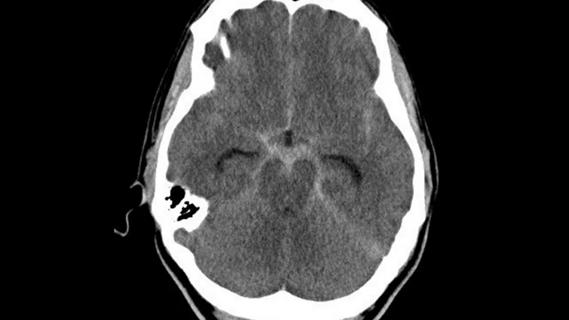
Digital subtraction angiography remains central to assessment of ‘benign’ PMSAH

Cleveland Clinic neuromuscular specialist shares insights on AI in his field and beyond
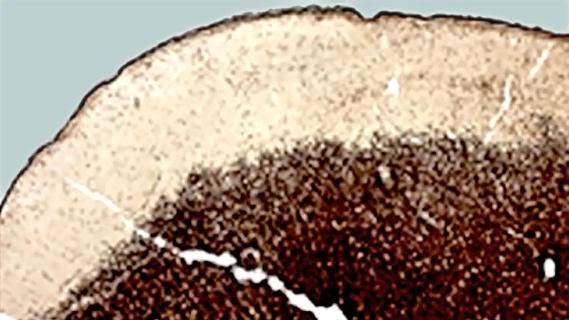
Findings challenge dogma that microglia are exclusively destructive regardless of location in brain

Neurology is especially well positioned for opportunities to enhance clinical care and medical training
New review distills insights from studies over the past decade
 Search