Locations:





‘A gateway to...a new range of therapies for atherosclerosis’
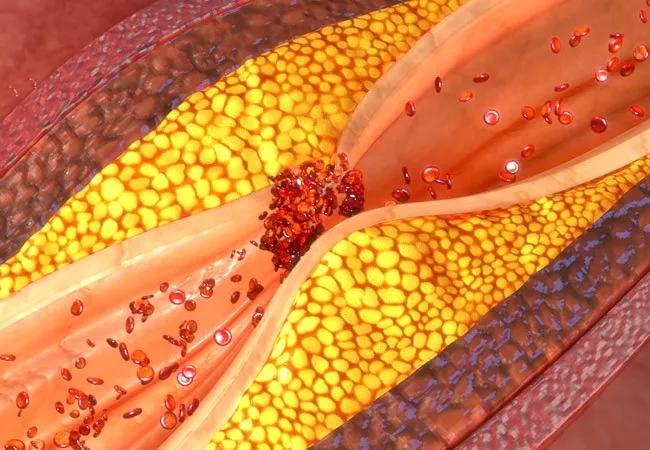
Image content: This image is available to view online.
View image online (https://assets.clevelandclinic.org/transform/b7aa74aa-cbb8-4d15-9b7b-7cd0fbb1bb60/Nissen-CANTOS_jpg)
CANTOS: Why It’s a Big Deal — and 5 More Things to Know About It
Publication of the CANTOS study late last summer was “the biggest thing we’ve seen in preventive cardiology in a long time,” says Cleveland Clinic Cardiovascular Medicine Chair Steven Nissen, MD.
Advertisement
Cleveland Clinic is a non-profit academic medical center. Advertising on our site helps support our mission. We do not endorse non-Cleveland Clinic products or services. Policy
The multicenter trial made huge headlines when it finally proved the inflammatory hypothesis of atherothrombosis by showing that canakinumab, a monoclonal antibody targeting interleukin-1β, significantly reduced recurrent cardiovascular events among 10,061 patients with prior myocardial infarction and elevated high-sensitivity C-reactive protein (CRP) levels.
“For the first time, it’s been shown that tamping down inflammation can actually reduce cardiovascular risk independent of lipid-lowering effects,” says Dr. Nissen. “We now have a completely new strategy for reducing morbidity and mortality in coronary disease. Now that it’s been demonstrated that an anti-inflammatory strategy works, there’s going to be a rush to look for other ways to attack inflammation. This study is a gateway to the development of a whole new range of therapies for atherosclerosis.”
Although Dr. Nissen wasn’t an investigator in the CANTOS trial, he’s a longtime supporter of the inflammatory hypothesis and congratulates lead author Paul Ridker, MD, for the vindication the study provides for the theory, for which Dr. Ridker was the principal pioneer. In a recent conversation, Dr. Nissen drew on his many years of advocating for the hypothesis to offer perspectives on the past and future of anti-inflammatory therapy in the wake of CANTOS. Five of those perspectives are recapped below.
The roots of CANTOS reach back to the late 1980s, when Dr. Ridker began suggesting that inflammation plays a key role in atherosclerosis. The rationale was elegantly laid out in a pivotal 1999 paper, “Atherosclerosis—An Inflamamatory Disease,” by Russell Ross, PhD, of the University of Washington. Around that time, Dr. Ridker began publishing work showing that inflammation was associated with increased cardiovascular risk and could be measured by CRP levels.
Advertisement
Next came a pair of landmark papers simultaneously published in New England Journal of Medicine in January 2005 — a report from the REVERSAL trial led by Dr. Nissen at Cleveland Clinic and a report from the PROVE-IT trial led by Dr. Ridker’s group in Boston. REVERSAL showed that atherosclerosis progression could be reduced with intensive statin therapy while PROVE-IT showed that morbidity and mortality in acute coronary syndromes could be reduced with intensive statin therapy.
“Analyses of both trials showed that their results couldn’t be explained by the statins’ LDL cholesterol-lowering effects alone,” Dr. Nissen notes. “They showed that reduction in inflammation, as measured by CRP level, was also responsible for the improvement in outcomes. That formed the hypothesis that was ultimately tested in CANTOS.”
Canakinumab, the monoclonal antibody studied in CANTOS, is “a pure anti-inflammatory drug,” Dr. Nissen observes, explaining that it doesn’t affect LDL cholesterol, HDL cholesterol or triglycerides. “It just reduces inflammation, so it was a huge gamble to undertake a 10,000-patient trial of a completely unproven strategy. The world was stunned when CANTOS showed that a drug that has no effect at all on lipids could reduce morbidity and mortality.”
Although some have called canakinumab’s effect on cardiovascular events in CANTOS modest — a 15 percent reduction from placebo with the most effective dose — Dr. Nissen notes that this is about the same as has been observed in PCSK9 inhibitor outcome trials. What’s more, that reduction was achieved on top of background therapy with optimal standard treatment, including aggressive statin therapy. Moreover, canakinumab conferred a roughly 30 percent reduction in need for revascularization over the study’s 48-month follow-up.
Advertisement
Dr. Nissen expects canakinumab’s sponsor to file for FDA approval by early 2018 for use of the agent, currently available under orphan drug status for juvenile idiopathic arthritis, for secondary prevention in high-risk coronary disease. If canakinumab is priced appropriately, he suspects it could be used fairly widely since its convenience of administration — by subcutaneous injection every three months — is likely to appeal to patients.
“Meanwhile, we’re going to be figuring out other ways we might achieve successful anti-inflammatory therapy in coronary disease,” Dr. Nissen says. In fact, the NIH has the 7,000-patient Cardiovascular Inflammation Reduction Trial (CIRT) of methotrexate underway, and two large outcome studies with colchicine are ongoing, although Dr. Nissen says they are less well-designed than the methotrexate trial.
Additionally, the most provocative finding of CANTOS — that canakinumab reduced the incidence and mortality of lung cancer in a dose-dependent manner, with the highest dose halving the incidence relative to placebo — will spur additional studies to explore that potential benefit. “This was totally unexpected,” says Dr. Nissen. “The prospect of a single therapy having a profound effect on both coronary disease and lung cancer would be unprecedented, although further confirmation is clearly needed.”
An interesting side effect of the study is that it bolsters the case for the value of routine measurement of CRP in candidates for coronary disease prevention. Dr. Nissen notes that Cleveland Clinic’s Section Head of Preventive Cardiology, Leslie Cho, MD, was an early advocate of routine CRP testing. “We’ve been doing this for at least a decade in our prevention clinic,” he says. “The CANTOS findings further suggest that we and others who’ve been doing this are way ahead of the game.”
Advertisement
Advertisement
A sampling of outcome and volume data from our Heart & Vascular Institute
Concomitant AF ablation and LAA occlusion strongly endorsed during elective heart surgery

Large retrospective study supports its addition to BAV repair toolbox at expert centers
Young age, solid tumor, high uptake on PET and KRAS mutation signal risk, suggest need for lobectomy
Surprise findings argue for caution about testosterone use in men at risk for fracture
Residual AR related to severe preoperative AR increases risk of progression, need for reoperation

Findings support emphasis on markers of frailty related to, but not dependent on, age
Provides option for patients previously deemed anatomically unsuitable
 Search