Locations:





Quality-driven employer contracting goes national

Image content: This image is available to view online.
View image online (https://assets.clevelandclinic.org/transform/14e1f156-c902-4c3f-a83f-da124f3b6352/National-Contracting-690x380_jpg)
National Contracting-690×380
The Cleveland Clinic Cardiovascular Specialty Network was established earlier this year and is now actively adding member provider organizations across the country. This is the country’s first national-scale network of affiliated cardiovascular care providers for the purpose of contracting with employers and other payers.
Advertisement
Cleveland Clinic is a non-profit academic medical center. Advertising on our site helps support our mission. We do not endorse non-Cleveland Clinic products or services. Policy
“We’re assembling a group of like-minded provider organizations aligned around quality-driven, high-performance cardiovascular care,” explains Joseph Cacchione, MD, Chair of Operations and Strategy for Cleveland Clinic’s Sydell and Arnold Miller Family Heart & Vascular Institute. “The aim is to present a network offering to provide predictable quality at a predictable price to large employers, health exchanges and physician-owned accountable care organizations.”
The Cardiovascular Specialty Network is able to ensure predictable quality thanks to an intensive assessment process Cleveland Clinic uses to evaluate potential network members for clinical and operational quality, data integrity and cultural alignment. That process has emerged from a robust program of affiliations, alliances and consulting relationships Cleveland Clinic has forged around cardiovascular care dating back to the late 1990s. These relationships — from consulting arrangements to extensive clinical and research alliances — are outlined below:
Advertisement
The new network is a way to better leverage Cleveland Clinic’s direct-to-employer contracts to provide cardiovascular care to large national employers and private health insurance exchanges. Such contracts currently cover a couple million lives, and ongoing discussions with Fortune 500 companies aim to increase that count.
“Employers are asking for more local options,” explains Daniel Towarnicke, the Heart & Vascular Institute’s Director of Outreach Programs. “The idea is to work with hospitals throughout the country that demonstrate the best performance and patient experience so that our contracted employers can encourage employees to use nearby network providers when possible and appropriate.”
“Healthcare is often regional,” adds Dr. Cacchione, who notes that a national network covering all major regions yields benefits for all stakeholders:
Advertisement
Many of the above benefits hinge on the Cardiovascular Specialty Network’s promise of strict quality standards. Those standards cover diverse aspects of clinical and operational practice and are closely guarded by Heart & Vascular staff at every turn.
In addition to hard measures like monthly outcomes data supplied by the American College of Cardiology and the Society of Thoracic Surgeons, the intensive assessment of potential affiliates and network members includes reviews of patient experience measures, quality processes, operational and administrative procedures, and data integrity.
“Data integrity is the first thing we focus on,” says Towarnicke, since it’s essential to reliably documenting the other measures and has become central to the drive toward safer and more efficient care. “We have a team that does site visits to assess data infrastructure, data auditing and similar issues.”
They’re not the only ones who do site visits. For more than six years the Heart & Vascular Institute has been sending a diverse team of clinical and administrative experts — physicians, nurses, data analysts, continuous improvement specialists, project managers and others — to do site visits for potential affiliates and consulting clients. Each section of the Heart & Vascular Institute has one or two go-to physicians who regularly do such visits and provide ongoing consulting to affiliate hospitals.
Such involvement by physician leaders turns a lot of heads. “Cleveland Clinic is a physician group, so this is a physician run network and affiliate program,” says Dr. Cacchione. “We pay our cardiology and cardiothoracic surgery departments for a portion of their physicians’ time so they can do site visits to evaluate for quality and operations. We send some of our highest-performing physicians — national experts like Dr. Stephen Ellis and Dr. Bruce Lindsay — out to do program evaluations. This network is based on quality, and physicians understand clinical quality better than anybody.”
Advertisement
Dr. Cacchione’s team recognizes that quality can be used as both a stick and a carrot. It will terminate a relationship with an affiliate hospital that has poor outcomes — and has done so once thus far. But it likewise brings an ethic of continuous improvement to its relationship with each of its various partners. “Our range of consulting and affiliate relationships is a continuum,” explains Towarnicke. “We will work with consulting clients if they aspire to qualify for affiliate status. For affiliates that don’t qualify for Cardiovascular Specialty Network membership, we consult and work with them so that they might ultimately meet that quality threshold. A commitment to continuous improvement is important.”
Dr. Cacchione says that commitment is the key to the “cultural fit” he looks for in potential network members. He shares the story of one hospital that said they couldn’t fix a bad metric they had. “They asked me, ‘You won’t let us into the network just because of that one metric?’ I told them it wasn’t so much the bad metric as the fact that they said they can’t fix it and don’t seem to want to. None of us is perfect, but we all need that drive to be better every day. That’s the culture we’re looking for.”
Advertisement
Advertisement
A sampling of outcome and volume data from our Heart & Vascular Institute
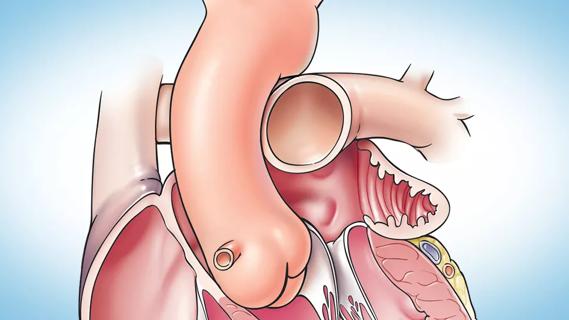
Concomitant AF ablation and LAA occlusion strongly endorsed during elective heart surgery
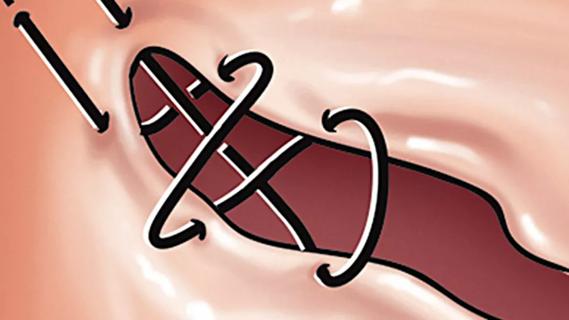
Large retrospective study supports its addition to BAV repair toolbox at expert centers
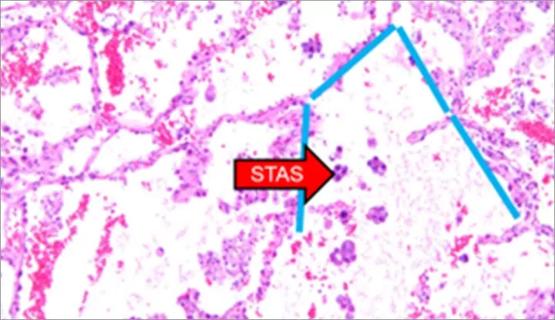
Young age, solid tumor, high uptake on PET and KRAS mutation signal risk, suggest need for lobectomy
Surprise findings argue for caution about testosterone use in men at risk for fracture
Residual AR related to severe preoperative AR increases risk of progression, need for reoperation
Findings support emphasis on markers of frailty related to, but not dependent on, age
Provides option for patients previously deemed anatomically unsuitable
 Search