Locations:





Promises a new window into acute effects of head impacts
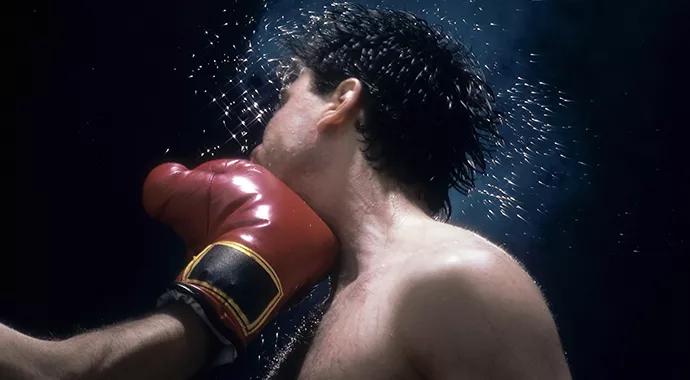
Image content: This image is available to view online.
View image online (https://assets.clevelandclinic.org/transform/425d093b-53b0-48b2-8160-9981276939b4/690x380-Bartsch_jpg)
690×380-Bartsch
By Adam Bartsch, PhD; Jay Alberts, PhD; and Edward Benzel, MD
Advertisement
Cleveland Clinic is a non-profit academic medical center. Advertising on our site helps support our mission. We do not endorse non-Cleveland Clinic products or services. Policy
The sports concussion crisis has fueled a lot of research assessing concussion through imaging, behavioral evaluation or impact studies, but little to no research has combined these three modalities for a comprehensive look at the acute effects of head impacts in combat sports. Until now.
Researchers from across Cleveland Clinic’s Neurological Institute are conducting an investigation we call the Boxing Biomechanics Study that uses all three modalities — imaging, behavioral assessment and evaluation of impact dynamics — to begin to pinpoint the dose of head impact that produces brain changes linked to neurodegenerative disease.
Our aim is to assess and refine this three-pronged data-gathering approach in a small group of boxers and mixed martial arts fighters to build toward prospective longitudinal studies in large numbers of athletes tracked over years or decades.
Our team — which draws from Cleveland Clinic staff in the Center for Spine Health, Concussion Center and Lou Ruvo Center for Brain Health — began the Boxing Biomechanics Study in 2013, and we expect to report results later this year.
We have enrolled five boxers and mixed martial artists in Las Vegas who are evaluated over one to two days as follows:
Advertisement
We are analyzing and correlating data from all three modalities in this initial group of 10 fighters in the hope that this approach will prove to be a comprehensive, “one stop” data collection strategy for assessing and quantifying the dose of head impact causing neurodegenerative changes.
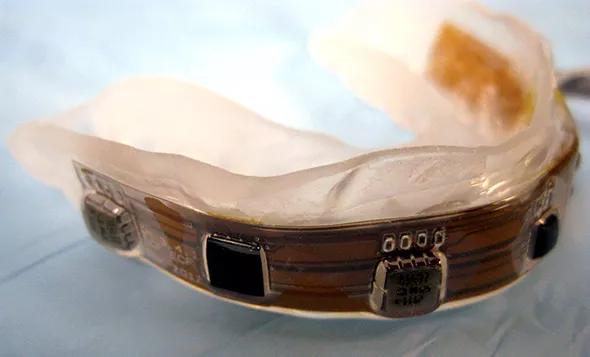
Image content: This image is available to view online.
View image online (https://assets.clevelandclinic.org/transform/4163a0f3-ee0c-477c-ab35-0f4fde597d0d/590x-Inset-Bartsch_jpg)
Figure 1. The Intelligent Mouthguard includes sensors for measuring linear and rotational head movement in real time.
After we refine our data collection and technologies based on these findings, our next steps will be to expand the study population closer to 100 fighters and ultimately to 1,000 or more.
Likewise, we hope to extend follow-up assessments to years and even decades if we can follow fighters who turn professional — a prospect facilitated by the Lou Ruvo Center’s presence in Las Vegas. This presence, paired with Cleveland Clinic’s deep concussion expertise, uniquely positions us to comprehensively pursue new insights into how impact-related brain injury occurs, how it relates to clinical deficits, and which types of impacts do and do not cause concussion or other forms of traumatic brain injury.
Dr. Bartsch is Director of the Spine Research Laboratory in Cleveland Clinic’s Center for Spine Health.
Dr. Alberts is Director of Cleveland Clinic’s Concussion Center and Vice Chair for Health Technology Enablement in the Neurological Institute.
Dr. Benzel is Chairman of the Department of Neurological Surgery.
Advertisement
Advertisement

New study advances understanding of patient-defined goals
Testing options and therapies are expanding for this poorly understood sleep disorder
Real-world claims data and tissue culture studies set the stage for randomized clinical testing
Digital subtraction angiography remains central to assessment of ‘benign’ PMSAH

Cleveland Clinic neuromuscular specialist shares insights on AI in his field and beyond
Findings challenge dogma that microglia are exclusively destructive regardless of location in brain

Neurology is especially well positioned for opportunities to enhance clinical care and medical training
New review distills insights from studies over the past decade
 Search