Locations:





New approach is the subject of an ongoing clinical trial
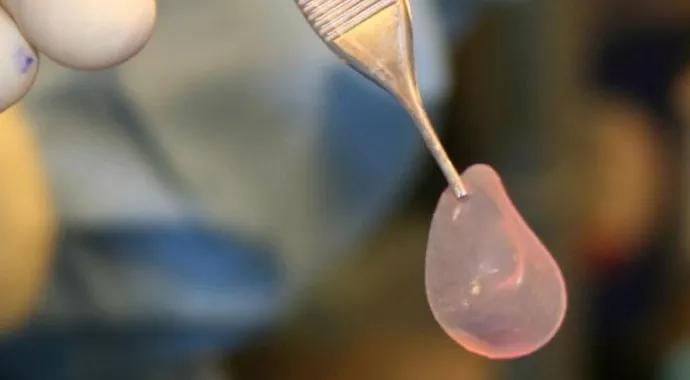
Image content: This image is available to view online.
View image online (https://assets.clevelandclinic.org/transform/18dbef59-4abe-4b1f-bffe-03d639098608/14-ORT-981-Saluan-Hero-Image-690x380pxl_jpg)
14-ORT-981-Saluan-Hero-Image-690x380pxl
Advertisement
Cleveland Clinic is a non-profit academic medical center. Advertising on our site helps support our mission. We do not endorse non-Cleveland Clinic products or services. Policy
Articular (hyaline) cartilage has a limited capacity for repair and regeneration. Injury to cartilage often results in scar formation, leading to a lasting loss of structure and function. Cleveland Clinic orthopaedic surgeons use several clinical strategies to promote the recovery of articular cartilage that has been harmed by acute trauma or repetitive joint damage. However, repair of cartilage, especially in the knee, remains a clinical challenge.
Combinations of surgical techniques with regenerative medicine approaches to cartilage repair have only begun to be explored as potential options for returning function, especially for patients who are young and active.
One such novel treatment involves the development of a cellular therapy for cartilage repair that relies on the superior biological activity of juvenile chondrocytes to produce a living cartilage equivalent. The lesions are first debrided and measured. The engineered tissue graft (Figure 1) is then cut out to the exact shape of the lesion and secured in place in the defect with fibrin glue in one surgical procedure. The patient is followed closely for five years postoperatively.
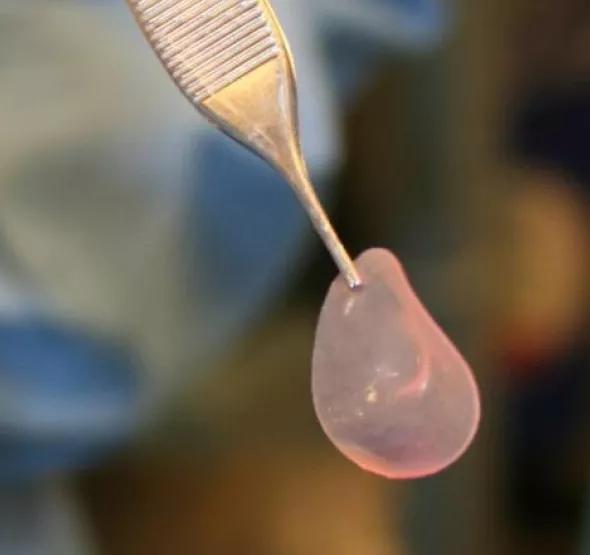
Image content: This image is available to view online.
View image online (https://assets.clevelandclinic.org/transform/3eb04102-bfda-4de4-a7f9-f26db7f22eab/14-ORT-981-Saluan-Inset-Image-590pxl-widthq_jpg)
Figure 1. Engineered tissue graft for a knee articular cartilage lesion.
We are participating in a Phase III randomized, controlled, multicenter study to evaluate the safety and efficacy of this procedure for grade 3 and 4 articular lesions of the knee in the femoral condyle or trochlear groove as compared with microfracture treatment. Although the graft used in the procedure is still investigational, initial results are promising.
Advertisement
For this study, the intended use of this implant is the treatment of up to two unilateral symptomatic articular cartilage lesions of the knee ranging from 1 to 5 cm2 in size. The lesions must be in separate compartments of the same knee, and the total combined area of the two lesions should not be greater than 6 cm2. Patients will be treated and followed for five years at Cleveland Clinic’s Center for Sports Health.
Eligible subjects are patients between the ages of 18 and 60 with moderate to severe pain. Lesions to be treated must be shouldered by surrounding native cartilage. Ipsilateral knees must have relatively intact menisci and stable ligaments and need to exhibit normal alignment. Contralateral knees must be asymptomatic and stable.
Superiority between the treatment and comparator groups is being assessed in mean Knee injury and Osteoarthritis Outcome Score (KOOS) pain and ADL scores at 18 and 36 months. Clinical assessments, including imaging, are done at baseline, at 6 weeks, and at 6, 12, 18, 24, 36, 48 and 60 months.
Although articular cartilage lesions continue to be a challenge to treat, there is a clear trend toward combining biological solutions with surgical techniques for their repair and regeneration, such as the approach being studied at our Center for Sports Health. We look forward to sharing the study results as they become available.
Dr. Saluan holds joint appointments in the Center for Sports Health and the Center for Pediatric Orthopaedic Surgery within Cleveland Clinic’s Orthopaedic & Rheumatologic Institute. He specializes in pediatric and adolescent sports medicine and arthroscopic surgery. He is certified in orthopaedic surgery and holds a subspecialty certificate in sports medicine from the American Board of Orthopaedic Surgery.
Advertisement
Advertisement
Biologic approaches, growing implants and more
Study reports zero infections in nearly 300 patients
How to diagnose and treat crystalline arthropathy after knee replacement
Study finds that fracture and infection are rare
Center will coordinate, interpret and archive imaging data for all multicenter trials conducted by the foundation’s Osteoarthritis Clinical Trial Network

Reduced narcotic use is the latest on the list of robotic surgery advantages
Cleveland Clinic specialists offer annual refresher on upper extremity fundamentals
Cleveland Clinic orthopaedic surgeons share their best tips, most challenging cases and biggest misperceptions
 Search