Locations:





30 CME-certified webcasts now available
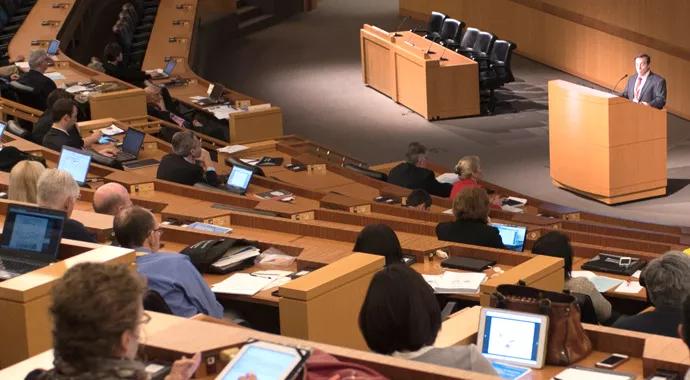
Image content: This image is available to view online.
View image online (https://assets.clevelandclinic.org/transform/f34482ef-85ba-4698-b845-0daa8c5b995c/15-RHE-966-Hajj-Ali-Hero-Image-690x380pxl_jpg)
15-RHE-966-Hajj-Ali-Hero-Image-690x380pxl
Clinicians from at least 29 states and more than 20 nations were edified and educated at Cleveland Clinic’s biennial Biologic Therapies Summit in Cleveland this past spring. And now you too can participate in CME enduring materials from this premier summit on biologic therapy in rheumatology and beyond
Advertisement
Cleveland Clinic is a non-profit academic medical center. Advertising on our site helps support our mission. We do not endorse non-Cleveland Clinic products or services. Policy
Free CME-certified webcasts are available for 30 individual presentations from the two-and-a-half-day summit. And a CME-certified online monograph based on the summit is scheduled for release soon. Check back at ccfcme.org/rheumcme for that and a wealth of other rheumatology- and immunology-related CME offerings, all of which have been approved for AMA PRA Category 1 credit™.
Optimization was the watchword for this sixth offering of the summit, titled “Biologic Therapies VI: Optimizing Therapies.” Several sessions were devoted to various aspects of treatment optimization, including treating to target, optimizing safety in biologics use and making the most of experience with biologics across diverse specialties
The latter was the focus of a first-time session, “Biologic Crossfire: What Can We Learn from Each Other?” which featured perspectives from specialists in neurology, oncology, dermatology and gastroenterology as well as from the rheumatologists and immunologists who made up the majority of the summit’s faculty of national and international experts
Among other summit highlights:
“This year’s summit was the most successful yet, with a growing international audience from over 20 countries,” says summit co-director Leonard Calabrese, DO, R.J. Fasenmyer Chair of Clinical Immunology at Cleveland Clinic.
Advertisement
“Many rheumatologists struggle with the risks and benefits of using novel biologic therapies,” adds summit co-director M. Elaine Husni, MD, MPH, Director of Cleveland Clinic’s Arthritis and Musculoskeletal Treatment Center. “The experts at this summit provided valuable suggestions on differential diagnosis, measuring disease severity, treatment options and complications. The tips I learned will allow me to practice at the top of my game.”
Another highlight was the summit’s daylong pre-symposium, “Vasculitis of the CNS: Diagnosis, Management and Research,” believed to have been the first major meeting ever devoted to this complex vascular inflammatory disease.
“Many physicians reach out for second opinions on CNS vasculitis, so we decided to bring together top experts on this condition and its major mimics to educate many providers in a single setting,” says symposium co-director Rula Hajj-Ali, MD, of the Center for Vasculitis Care and Research in Cleveland Clinic’s Department of Rheumatic Diseases.
“Our multidisciplinary faculty from Cleveland Clinic and other leading North American centers provided a comprehensive exploration of the workup, differential diagnosis and treatment of CNS vasculitis, with particular emphasis on ruling out other similar conditions,” notes symposium co-director Carol Langford, MD, MHS, Director of the Center for Vasculitis Care and Research.
Dr. Calabrese, who also served as co-director of the symposium, adds: “Cleveland Clinic’s R.J. Fasenmyer Center for Clinical Immunology is committed to spreading the word that CNS vasculitis is treatable if detected soon enough and not confused with its many mimics.”
Advertisement
Proceedings of the CNS vasculitis symposium will be published as a non-CME supplement to Seminars in Arthritis and Rheumatism.
Advertisement
Advertisement
Treatment strategies require understanding of pathomechanisms
Education, prevention strategies and monitoring serves this at-risk group
Treatment for scleroderma can sometimes cause esophageal symptoms
Lupus Clinic providers collaborate to advance treatment and understanding
Older Psoriasis Patients May Experience Quicker Transition
Cleveland Clinic’s Rheumatic Lung Disease program treats patients with complex conditions
Symptoms complement one another

E-coaching program is tailored for those with the disease
 Search