Locations:





New study finds association between the urinary tract microbiome and USD
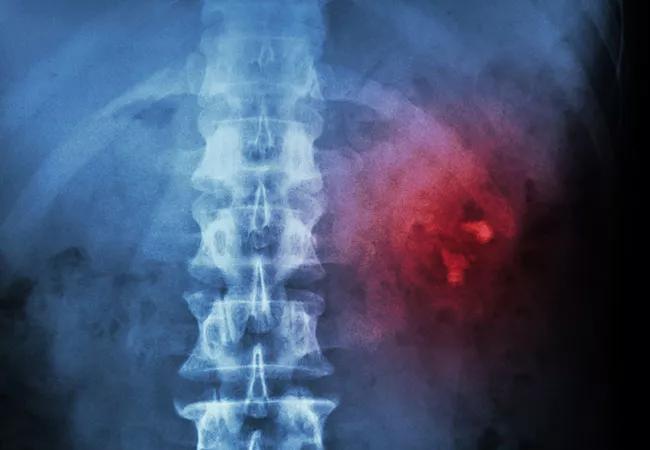
Image content: This image is available to view online.
View image online (https://assets.clevelandclinic.org/transform/25353956-0cd1-4463-a7e2-7d911848296e/650x450-Kidney-Stones_jpg)
650×450-Kidney-Stones
The incidence of urinary stone disease (USD) and other chronic inflammatory diseases, including obesity and cardiovascular disease, has increased over the last several decades. Researchers suspect that dysbiosis, a microbial imbalance caused, in part, by diet and antibiotics, may be a factor. Research recently published in Scientific Reports validates the claim that antibiotics influence a long-term shift in the microbiome that may increase risk for USD. It also establishes the urinary tract microbiome – and not the gut microbiome – as a pathogenic target for USD.
Advertisement
Cleveland Clinic is a non-profit academic medical center. Advertising on our site helps support our mission. We do not endorse non-Cleveland Clinic products or services. Policy
Aaron Miller, PhD, a project scientist with Cleveland Clinic’s Lerner Research Institute and Glickman Urologic & Kidney Institute, and senior author on the study, says the study aimed to understand the association between the microbiome and USD.
Previous studies have focused efforts on investigations into the gut microbiome, not the urinary tract microbiome, to understand the pathology of USD. “This is the first metagenomics study, to our knowledge, to actually compare the urinary tract microbiome between healthy populations and USD patients,” says Dr. Miller.
The study cohort included a total of 67 individuals, 43 with no history of USD and 24 patients with active USD. The investigators analyzed microbiota from gastrointestinal and urinary tracts, in addition to a metabolomic analysis of the urinary metabolome.
The urinary tract microbiota varied based on antibiotic use, family history of USD and sex – factors that have been associated with USD, but not linked to the urinary tract microbiome. The healthy and USD cohorts had significantly different urinary tract microbiota, while their gut microbiota showed only slight variation.
“The urinary tract microbiome associated with the disease much more strongly than the gut microbiome,” Dr. Miller notes. “People sometimes assume the gut microbiome is where all the action is happening and, yes, that’s where the greatest density and diversity of bacteria are, but in this case the urinary tract microbiome plays more of a role.”
And there is an intuitive relationship between the urinary tract microbiome and the progression of USD, as the urinary tract is where stones form. While this isn’t surprising given the proximity, there is a common misconception that the urinary tract is sterile, even though it harbors a native bacterial community.
Advertisement
Additionally, the study found that Enterobacteriaceae had a much stronger association with the USD patient group than any other bacterial family. This family of bacteria is also associated with infection stones, although those were excluded from this investigation.
“This suggests that these bacteria play a role in the gut, all the way to the urinary tract and even in the stones themselves, outside of just infection stones.”
Conversely, Lactobacillus were greatly reduced in the USD population, supporting the hypothesis that this bacteria plays a protective, stone-prohibiting role.
While it’s understood that Enterobacteriaceae and Lactobacillus promote USD disease and protect against stone formation, respectively, it’s not clear why exactly this is happening. Dr. Miller hypothesizes that antibiotics are likely responsible for the dysbiosis associated with these bacterial families in the microbiome. Future studies will aim to elucidate the specific mechanisms related to stone development.
The team is now developing a longitudinal study to track the shift in the microbial environment to determine when urinary stones begin to develop and who is at the highest risk.
“We’d like to build predictive assays of an individual’s microbiome to determine their likelihood of developing stones,” he says. This methodology would have implications for patients with recurrent episodes, family history of USD and risk for stones based on other metrics.
Importantly, the study also calls attention to the potential overuse of antibiotics.
Advertisement
“It demonstrates the need for clinicians to rationally prescribe antibiotics to patients. There are known – and unknown – implications that should be considered.”
Advertisement
Advertisement

Clinicians should individualize dosing practices based on patient risk factors and preferences
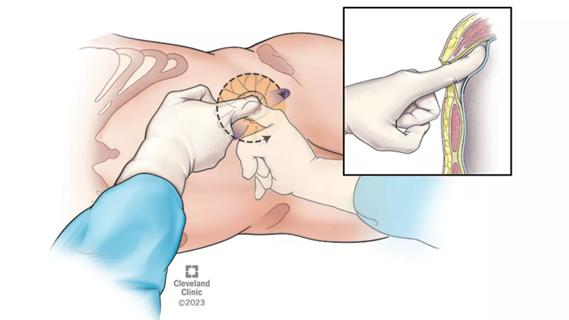
Pioneering and refining the approach in pyeloplasty, nephrectomy and more
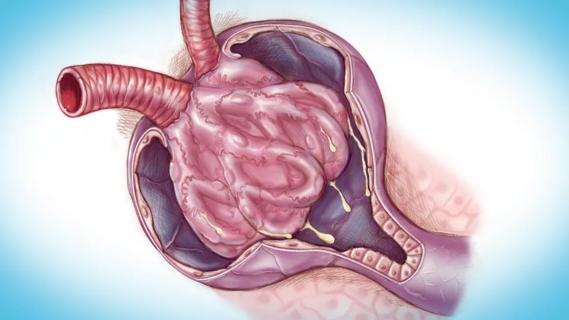
Fully-automated process uses preop CT, baseline GFR to estimate post-nephrectomy renal function

Could mean earlier treatment, but also could have negative effects

Unlike earlier pills, new drugs do not cause liver toxicity

Male factors play a role in about half of all infertility cases, yet men often are not evaluated
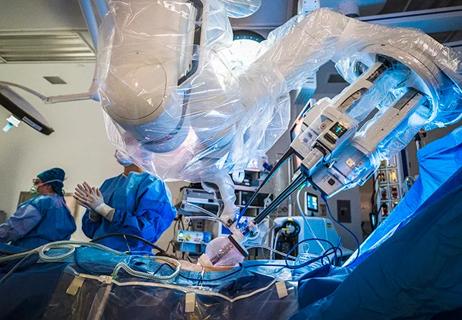
Surgeons choreograph nearly simultaneous procedures, sharing one robot between two patients

Identifying barriers in the renal genetic assessment of Black patients
 Search