Locations:





Course honoring the master neurosurgeon packs a substantive punch
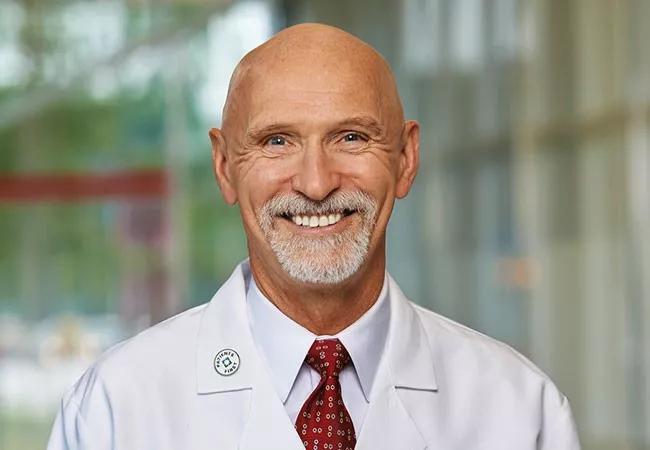
Image content: This image is available to view online.
View image online (https://assets.clevelandclinic.org/transform/3577d018-be40-4502-8993-76994d87db66/18-NEU-5941-Benzel-650x450_jpg)
18-NEU-5941-Benzel-650×450
It’s rare for an educational symposium at a major professional society meeting to honor a luminary in the society’s discipline. It’s rarer still for it to promise to edify even those in the specialty who know nothing about the luminary being honored.
Advertisement
Cleveland Clinic is a non-profit academic medical center. Advertising on our site helps support our mission. We do not endorse non-Cleveland Clinic products or services. Policy
On both counts, the Benzel Symposium: State of the Art in Complex Spine Surgery fits the bill. The day-and-a-half CME-certified course will be held in San Diego Thurs.-Fri., April 11-12, immediately before the 2019 annual scientific meeting of the American Association of Neurological Surgeons (AANS). While the symposium’s content is designed to honor the distinguished career of neurosurgeon Edward C. Benzel, MD (shown above), of Cleveland Clinic’s Department of Neurosurgery and Center for Spine Health, it does so by exploring spine care with the breadth and rigor that have marked Dr. Benzel’s practice.
We sat down with Cleveland Clinic Neurosurgery Chair Michael Steinmetz, MD — who is course co-director for the symposium along with Gregory Trost, MD, of the University of Wisconsin–Madison — to share some background and preview the symposium offerings.
Dr. Steinmetz: AANS President Shelly Timmons, MD, PhD, initiated the request to celebrate Ed Benzel’s life and career with a special symposium that not only provides updates on important surgical topics but is infused with the wisdom and exceptional patient care for which Ed is well known. Ed also invented a number of devices, and the spirit of innovation will be a big part of the symposium. This type of event honoring a single star in the discipline before the AANS annual meeting has very few precedents.
Dr. Steinmetz: Six consecutive sessions on spine care will be offered, covering deformity, tumor, minimally invasive surgery, trauma and degenerative disease, the cervical spine and the occipito-cervical junction, and finally leadership and clinical trials.
Advertisement
Each session will provide an overview of how the field developed — which innovations brought us to where we are today, and how we expect to go forward. The session leaders are true pillars of the field — the line-up looks like a “who’s who” of orthopaedic and neurospinal surgery. Because of Dr. Benzel’s prestige, it was easy to get the best to agree to lead sessions.
In addition to the sessions, Ed will be delivering two keynote presentations — “Doing What’s Right: Leadership, Knowledge, Wisdom and Inspiration” and “Biomechanics, Back Pain and Cervical Spondylosis.” Those two titles encapsulate the essence of this symposium: a mixture of state-of-the-art information on hot topics in spinal medicine and guidance from a seasoned pro in practicing the art of medicine.
Dr. Steinmetz: When I was a medical student at Texas Tech University School of Medicine, I took a fourth-year elective with Ed, who was then on faculty at the University of New Mexico School of Medicine in Albuquerque. He was a tremendous inspiration. Because of that experience, I applied to match there after graduation and was successful. But during my internship year, Ed let me know he was planning to go elsewhere. It was devastating to me. Knowing that, he told me that wherever he went next, he would take me along. True to his promise, when Cleveland Clinic offered him the position he wanted, he told them he had a resident who was part of the package! Many years later, we’re both still practicing at Cleveland Clinic.
Advertisement
When Ed retired as chair of Cleveland Clinic’s Department of Neurosurgery a couple years ago, I was privileged to follow in his footsteps. He continues to be a tremendous mentor and inspiration to me.
Dr. Steinmetz: Yes, we’re planning a gala dinner and roast to end the symposium. Ed is a fun person to be around and loves a good time. Attendees can roast for a fee, which will be donated to the Neurosurgery Research & Education Foundation, so the roast will benefit an important cause in addition to being entertaining.
Dr. Steinmetz: Neurosurgeons along the whole spectrum of their education and careers will get a lot out of it. For people who know Ed, this is a once-in-a-lifetime chance to honor him as a wonderful friend and colleague. For medical students, residents, and people in the early or middle stages of their practice, the symposium could be career-changing. Not only could it motivate people to go into this field, but it could nudge innovators to invent the next great device to advance the discipline.
No matter where attendees are in their career, they will be inspired to be better doctors. Ed has spent his career doing the right thing for his patients, considering deeply what is in their best interests. He is truly a great man who is adored by all, and this will be a wonderful opportunity to celebrate superb caregiving.
Program details and online registration for the Benzel Symposium can be found on the AANS website.
Advertisement
Advertisement

New study advances understanding of patient-defined goals
Testing options and therapies are expanding for this poorly understood sleep disorder
Real-world claims data and tissue culture studies set the stage for randomized clinical testing
Digital subtraction angiography remains central to assessment of ‘benign’ PMSAH

Cleveland Clinic neuromuscular specialist shares insights on AI in his field and beyond
Findings challenge dogma that microglia are exclusively destructive regardless of location in brain
Neurology is especially well positioned for opportunities to enhance clinical care and medical training
New review distills insights from studies over the past decade
 Search