Locations:





Useful zebrafish model drives progress
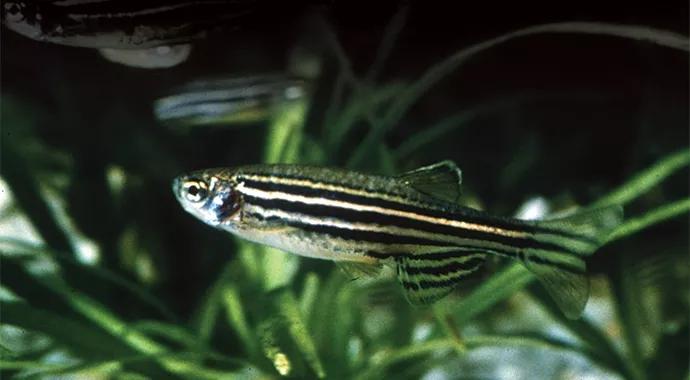
Image content: This image is available to view online.
View image online (https://assets.clevelandclinic.org/transform/4e05289b-b064-465b-8baf-da7e70613f5e/690x380-Wilson-Zebra-Fish_jpg)
cole eye zebra fish study
The laboratory of ophthalmic researcher Brian Perkins, PhD, at Cleveland Clinic’s Cole Eye Institute is on a mission to find out what happens at the molecular and cellular levels when genetic mutations cause ciliopathies – multi-syndrome diseases that affect cilia, structures found in all cells but which are critically important for survival of rod and cone photoreceptors in the eye.
Advertisement
Cleveland Clinic is a non-profit academic medical center. Advertising on our site helps support our mission. We do not endorse non-Cleveland Clinic products or services. Policy

Image content: This image is available to view online.
View image online (https://assets.clevelandclinic.org/transform/bd94bc82-4ab2-46bd-845a-c6302e0b49d8/jan2015-subscribe-cqdpulse3_jpg)
“We try to understand how different genetic mutations contribute to the severity of blindness in children, and whether multiple genes increase or decrease the effects,” he says.
Along with other methods, Dr. Perkins and his colleagues use zebrafish as an animal model to examine how mutations affect the structure of rods and cones, as well as whether the mutations affect the cellular function of other proteins.
According to Dr. Perkins, the zebrafish is a small, freshwater fish with eyes that are remarkably similar to those of humans. “We have zebrafish that carry mutations in the same genes that cause multiple ciliopathies in humans, including Joubert Syndrome, and the fish often have very similar defects,” he says.
Joubert Syndrome is a rare but debilitating disease that causes neurological problems, varying degrees of mental retardation or developmental delays, kidney cysts, and often, progressive retinal degeneration.
According to Dr. Perkins, mutations in several different genes cause the disease, and this contributes to a wide degree of clinical variability and difficulty in making prognoses.
Although understanding of Joubert disease and other ciliopathies has greatly improved over the past decade, current knowledge is still somewhat limited on what these genes do at the cellular level and how mutations disrupt their function.
The genetic underpinnings of the disease have been identified, but there’s still no clear picture on the role of encoded proteins at the molecular level.
Advertisement
One challenge the researchers face is in understanding the different requirements of genes for rod and cone photoreceptors versus those for kidney or brain cells. Another challenge is to determine how the underlying genetics influences clinical variability.
Dr. Perkins and his colleagues bring an array of knowledge to bear on these challenges, including a background in genetics and molecular biology. Histological and microscopy techniques also help researchers understand how genetic mutations affect the structure of the zebrafish retina.
Cutting-edge techniques include the creation of transgenic zebrafish to detect certain proteins or generate specific mutations that correspond to known human genetic mutations.
The researchers collaborate with clinicians and other scientists at the Cole Eye Institute when they identify new mutations in patients with ciliopathies.
Perhaps the zebrafish model is the most important tool researchers have. “Zebrafish are small and inexpensive. Combined with the broad array of genetic tools at our disposal, they make it possible to address many questions more easily and quickly than with other model systems,” Dr. Perkins says.
Today his lab’s work remains at the basic science level. In the short term, the goal is to give genetic counselors a more complete understanding of whether certain mutations lead to photoreceptor loss and blindness.
In the long term, Dr. Perkins intends to clarify the genetic landscape of the disease to better enable future treatments so that they are more appropriate and personalized for each patient.
Advertisement
Advertisement
Early data shows risk is 73% higher in patients with lupus, 40% higher in patients with rheumatoid arthritis
Identifies weak spots in the cornea before shape change occurs
Study highlights the value of quantitative ultra-widefield angiography
Switching medications may decrease treatment burden and macular fluid
Interventions abound for active and stable phases of TED
Corneal imaging and interpretation play a major role
Cole Eye Institute imaging specialists are equal parts technician, artist and diagnostician
Effect of low-dose atropine and dual-focus contact lenses is unknown in patients with comorbid eye conditions
 Search