Locations:





 Search
Cleveland Clinic among first centers to use devices
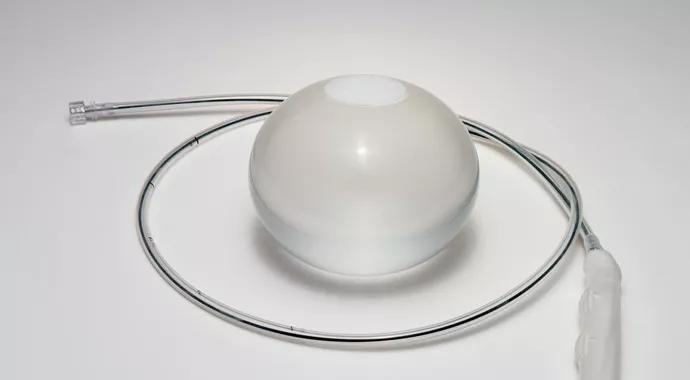
Image content: This image is available to view online.
View image online (https://assets.clevelandclinic.org/transform/7adfd920-218f-4085-8353-39d3326b9ac0/BalloonEndo-690x380_jpg)
BalloonEndo-690×380
By Matthew D. Kroh, MD, FACS
Advertisement
Cleveland Clinic is a non-profit academic medical center. Advertising on our site helps support our mission. We do not endorse non-Cleveland Clinic products or services. Policy
Cleveland Clinic will be among the first centers in the nation to use an intragastric balloon device to help obese patients lose weight without the need for invasive bariatric surgery.
The ReShape Integrated Dual Balloon System and the ORBERA Intragastric Balloon System were approved by the U.S. Food & Drug Administration this summer, providing new non-surgical treatment options for patients who failed previous attempts at weight loss through diet and exercise alone.
Both systems are implanted in the stomach via a 30-minute minimally invasive endoscopic outpatient procedure while the patient is under mild sedation. Once in place, the balloon devices are inflated with a sterile solution. The balloons partially fill the stomach to provide a feeling of satiety. The major difference between the two devices is the ReShape system is a dual balloon system, while ORBERA is a single balloon system.
Cleveland Clinic will study the outcomes of both devices to determine differences in efficacy of weight loss, tolerability and complications. Although both devices have been available in Europe and elsewhere for years, the efficacy of intragastric balloons, in terms of weight loss, is significantly less than established laparoscopic surgical procedures in the United States.
The devices are for use in obese adult patients with a body mass index between 30 and 40. The ReShape system is limited to patients with one or more obesity-related conditions, including hypertension, high cholesterol and diabetes.
Advertisement
The balloons are removed after six months, at which time patients remain in a structured dietary program to maintain weight loss. In a multicenter clinical trial of the ReShape system, patients lost an average of 6.8 percent of their total body weight. The ORBERA Pivotal Trial study revealed patients lost an average of 10.2 percent of their body weight.
Potential side effects are headache, muscle pain and nausea from the sedation and procedure. In rare cases severe allergic reaction, heart attack, esophageal tear, infection and breathing difficulties can occur. Once the device is in place, patients may experience vomiting, nausea, abdominal pain, gastric ulcers and indigestion.
The American Society for Gastrointestinal Endoscopy Bariatric Endoscopy Task Force concluded endoscopic bariatric therapies should be performed within a comprehensive, multidisciplinary metabolic and bariatric treatment program to identify the best candidates and to best monitor safe introduction of the balloon systems.
The devices should not be used in patients with previous gastrointestinal or bariatric surgery, or anyone diagnosed with inflammatory intestinal or bowel disease, large hiatal hernia, symptoms of delayed gastric emptying or active H. Pylori infection.
Other FDA-approved surgically implanted weight loss devices include the LAP-BAND Adjustable Gastric Banding System, REALIZE Adjustable Gastric Band and Maestro Rechargeable System. Neither ReShape nor ORBERA are covered by insurance.
The introduction of intragastric balloon therapy for Americans will allow patients access to a minimally invasive non-surgical approach to treat obesity and weight-related disease. Overall, the FDA approval of the balloon is an important aid in the battle to stem the tide of obesity.
Advertisement
Dr. Kroh is co-chair of Society of American Gastrointestinal and Endoscopic Surgeons (SAGES) Endoscopic Bariatric Task Force and Director of Surgical Endoscopy and Program Director for the Advanced Laparoscopic Surgery and Flexible Surgical Endoscopy Fellowship at Cleveland Clinic. His specialty interests include advanced laparoscopic surgery, bariatric surgery, gastrointestinal surgery, surgical endoscopy, single incision laparoscopic surgery and robotic surgery.
Photo credits: ORBERA™ Intragastric Balloon
Advertisement
Advertisement

Strong patient communication can help clinicians choose the best treatment option
ctDNA should be incorporated into care to help stratify risk pre-operatively and for post-operative surveillance

The importance of raising awareness and taking steps to mitigate these occurrences
New research indicates feasibility and helps identify which patients could benefit

Treating a patient after a complicated hernia repair led to surgical complications and chronic pain
Standardized and collaborative care improves liver transplantations
Fewer incisions and more control for surgeons

Caregiver collaboration and patient education remain critical