Locations:





Rates of subdural and intracranial hemorrhage not affected by limiting drainage volume
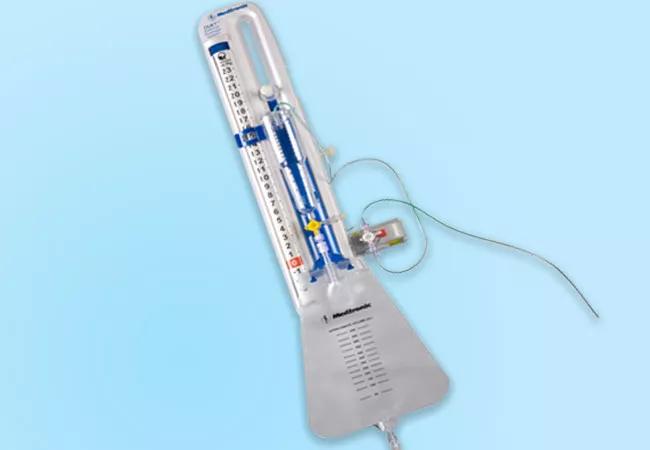
Image content: This image is available to view online.
View image online (https://assets.clevelandclinic.org/transform/b8337e95-435a-45a6-8da5-469de15406ae/21-HVI-2541218-CQD-Hero-650x450-skewed_jpg)
21-HVI-2541218-CQD-Hero-650×450-skewed
The combined incidence of subdural hematoma (SDH) and intracranial hemorrhage (ICH) after spinal drainage for aortic surgery was 2.3% in a series of Cleveland Clinic patients, and it was not associated with the volume of cerebrospinal fluid (CSF) drained. In contrast, postoperative thrombocytopenia was associated with increased risk of these complications, although perioperative aspirin and prophylactic low-dose heparin were not.
Advertisement
Cleveland Clinic is a non-profit academic medical center. Advertising on our site helps support our mission. We do not endorse non-Cleveland Clinic products or services. Policy
These are among key findings of a retrospective analysis of patients who underwent spinal drain placement for aortic surgery over a recent four-year period. The study was published in the Journal of Vascular Surgery.
“Spinal cord injury from aortic surgery can have devastating consequences, and it’s important to try to identify contributing factors,” says the study’s first author, Sean Lyden, MD, Chair of Vascular Surgery at Cleveland Clinic. “Although excessive CSF drainage has been suspected of being associated with risk, different fluid management protocols were not found to affect complication rates in our study.”
Spinal drains mitigate the risk of spinal cord injury following aortic surgery. However, they also may lead to complications. Questions remain about optimal drain management, particularly related to the amount of CSF that may be removed.
Cleveland Clinic surgeons employ one of the following two protocols for managing spinal drainage in this setting:
The current study characterized the frequency and types of spinal drain-related complications at Cleveland Clinic, and compared the outcomes of the two different drainage volume management protocols. The protocol used was per physician preference.
The study included 473 patients who had spinal drainage placement at Cleveland Clinic from 2012 through 2015 for the following aortic procedures:
Advertisement
Seven patients underwent a hybrid open/endovascular repair. Mean age at time of procedure was 67.2 + 12.5 years, and 66% of patients were male.
Complications related to spinal drainage included the following:
Complications corresponded with the following factors in varied ways, as follows:
The incidence of SDH/ICH associated with spinal drains in this study is about the same as reported in previous studies. However, the results differ from other studies that found that SDH results from excessive CSF drainage. Differences may be attributed to the Cleveland Clinic protocols, which include the practices outlined below.
Advertisement
Drain pressure set at 10 cm H2O. This level was used in both of this study’s protocols. Other studies reported drains set to 5 cm H2O.
Smaller needle size. All but two patients in this study had their drain placed with a 14-gauge needle, whereas other reports have used 16-gauge or larger needle sizes to puncture the dura.
Preoperative drain placement. Either preoperative or intraoperative drain placement was used in this study, with placement the day before surgery found to have improved outcomes. The authors speculate that this might be attributed to more accurate placement in the interventional neuroradiology suite with fluoroscopy guidance versus the use of anatomic landmarks for intraoperative placement.
“Spinal drains have a key role in aortic surgery, but they’re not without risk,” says Dr. Lyden. “They should be used only after careful consideration of risks and potential benefits, with special precautions taken in the setting of thrombocytopenia.”
“Use of spinal drains in thoracoabdominal aortic repair has been important in preventing perioperative spinal cord ischemia and paralysis,” adds Cleveland Clinic cardiothoracic surgeon Patrick Vargo, MD, who was not involved in the study. “Their associated risk of serious complications can be reduced with elective placement preoperatively. Similarly, attention to postoperative thrombocytopenia and platelet dysfunction is necessary, as these are often encountered if mechanical circulatory support is used during cardio-aortic surgery.”
Advertisement
Based on the outcomes of this study, Dr. Lyden notes, Cleveland Clinic has adopted a unified protocol for drain management. The team also has created an algorithm to determine whether the risk of a spinal drain and having a complication is higher than proceeding without a spinal drain.
Photo of spinal drain at top is courtesy of Medtronic.
Advertisement
Advertisement

A sampling of outcome and volume data from our Heart & Vascular Institute
Concomitant AF ablation and LAA occlusion strongly endorsed during elective heart surgery
Large retrospective study supports its addition to BAV repair toolbox at expert centers
Young age, solid tumor, high uptake on PET and KRAS mutation signal risk, suggest need for lobectomy
Surprise findings argue for caution about testosterone use in men at risk for fracture
Residual AR related to severe preoperative AR increases risk of progression, need for reoperation

Findings support emphasis on markers of frailty related to, but not dependent on, age
Provides option for patients previously deemed anatomically unsuitable
 Search