Locations:






Image content: This image is available to view online.
View image online (https://assets.clevelandclinic.org/transform/600f6c59-b7a5-492e-8780-2d84f4ac5185/WPW-690x380_jpg)
Asymptomatic WPW Pattern
Wolff-Parkinson-White (WPW) is a condition characterized by the presence of an extra electrical pathway in the heart that may result in the development of fast, abnormal heart rhythms.
Advertisement
Cleveland Clinic is a non-profit academic medical center. Advertising on our site helps support our mission. We do not endorse non-Cleveland Clinic products or services. Policy
Patients who experience recurrent tachycardia as a result of this abnormal pathway have WPW syndrome. Patients who have the WPW pathway but no tachycardia have a WPW pattern or asymptomatic WPW.
In young, otherwise healthy, individuals, WPW pattern is most often identified on screening ECGs, often done as part of pre-participation athletic testing. Bryan Baranowski, MD, an electrophysiologist and invasive cardiologist in the Section of Electrophysiology and Pacing in the Robert and Suzanne Tomsich Department of Cardiovascular Medicine, says WPW affects about one to three in 1,000 people. It is a hereditary condition, and first-degree relatives of a patient with WPW carry a higher risk for also having WPW, although the absolute in these individuals is also low at 0.05 percent (5/1000).
Individuals with WPW are born with an extra electrical pathway in the heart connecting the upper chambers (atria) to the lower muscular chambers of the heart (ventricles). The presence of this extra electrical wire predisposes the patient to the development of several forms of abnormally fast tachycardia.
The most common type of tachycardia that develops in WPW occurs when an electrical impulse in the heart becomes stuck in a loop and travels down the regular electrical pathway in the heart and then back up the extra pathway. This creates a sustained short circuit loop. Every time the electrical impulse travels this loop it creates a heartbeat. This can result in the sudden onset of a fast, sustained heart beat and often results in symptoms of palpitations, shortness of breath and marked dizziness.
Advertisement
Although this type of abnormal rhythm can be disconcerting to the patient, Dr. Baranowski says, it is seldom fatal. Patients may sometimes be able to terminate the fast rhythm themselves by coughing or bearing down. Sustained rhythms that do not respond to these maneuvers are usually readily terminated with the use of IV cardiac medication given by emergency personnel.
A far less common, but much more sinister, situation can develop if a patient with WPW develops atrial fibrillation (AF) – a rapid, disorganized electrical firing of the atria. AF typically is not an acutely harmful rhythm, except in select individuals with WPW. Certain WPW patients may have extra electrical pathways that allow this rapid firing in the upper chambers of the heart to travel down the extra pathway to the lower chambers in an accelerated manner, resulting in a rapid firing of the ventricle. This rapid firing of the bottom chamber – ventricular fibrillation – is a dangerous rhythm that results in cardiovascular collapse and sudden cardiac death unless treated immediately.
Not all patients with WPW are at risk for this type of event. The extra pathway must have certain properties that allow the electrical impulses to travel rapidly from the upper chambers to the lower chambers.
Dr. Baranowski says the presence of an extra pathway can be picked up on an ECG, but additional testing is necessary to determine the connection properties and whether it is a potentially dangerous pathway or not. If the connection can only conduct electrical impulses slowly, it is usually considered “wimpy” and carries a low risk of resulting in cardiac death. Dr. Baranowski says, in most cases, these pathways do not need treatment. Patients with these types of pathways may never develop symptoms.
Advertisement
If the pathway, however, demonstrates properties that suggest that it can conduct electrical impulses very rapidly, it could signal danger to the patient. In these cases a procedure to eliminate the pathway, regardless of whether the patient has experienced any symptoms, may be indicated.
Noninvasive testing, such as stress testing and holster monitors, are typically used to better understand the properties of the pathway and determine if it is dangerous or benign. Occasionally this testing is inconclusive and an invasive electrophysiology (EP) study is needed. An EP study involves running electrode catheters through a vein in the inner thigh and into the heart. The catheters can more precisely assess the properties the heart’s electrical pathways.
If the connection is deemed dangerous, that extra wire can be targeted for radiofrequency ablation – a technique by which radiofrequency energy is used to heat and, ultimately, destroy the tissue containing the extra electrical pathway. This is done during the same procedure and typically has a high success rate and carries a very low complication rate. Other options for preventing recurrence of tachycardia include surgical ablation or medication.
Bryan Baranowski, MD, is an electrophysiologist and invasive cardiologist in the Section of Electrophysiology and Pacing in the Robert and Suzanne Tomsich Department of Cardiovascular Medicine.
Advertisement
Advertisement

A sampling of outcome and volume data from our Heart & Vascular Institute
Concomitant AF ablation and LAA occlusion strongly endorsed during elective heart surgery
Large retrospective study supports its addition to BAV repair toolbox at expert centers
Young age, solid tumor, high uptake on PET and KRAS mutation signal risk, suggest need for lobectomy
Surprise findings argue for caution about testosterone use in men at risk for fracture
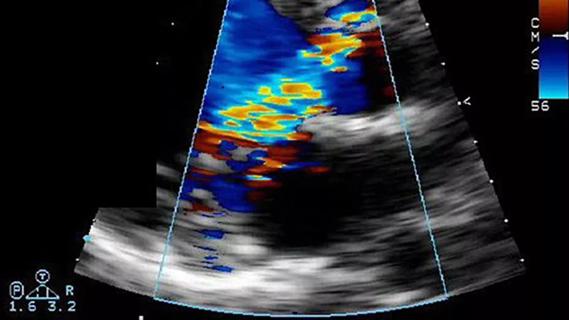
Residual AR related to severe preoperative AR increases risk of progression, need for reoperation

Findings support emphasis on markers of frailty related to, but not dependent on, age
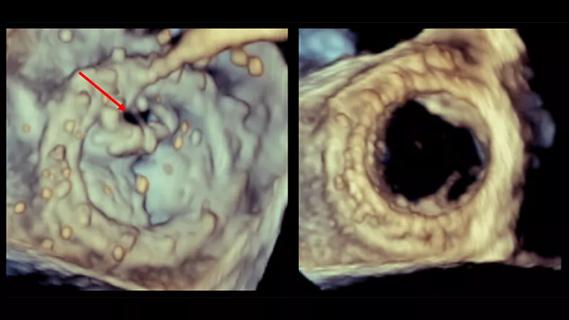
Provides option for patients previously deemed anatomically unsuitable
 Search