Locations:





Significant bleeding risk may outweigh any benefit
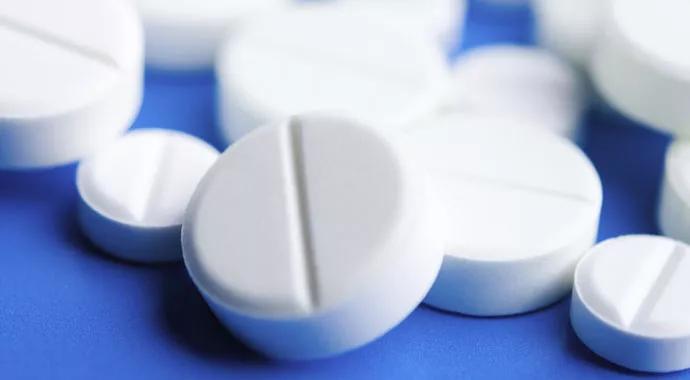
Image content: This image is available to view online.
View image online (https://assets.clevelandclinic.org/transform/c18f7c64-eec4-4b37-a761-bd2f5f114a76/Asprin-690x380_jpg)
Asprin-690×380
In patients with multiple risk factors for cardiovascular disease, daily low-dose aspirin failed to prevent the composite endpoint of nonfatal myocardial infarction (MI) or stroke and cardiovascular death, found a study presented at the American Heart Association 2014 Scientific Sessions.
Advertisement
Cleveland Clinic is a non-profit academic medical center. Advertising on our site helps support our mission. We do not endorse non-Cleveland Clinic products or services. Policy
The daily regimen produced significant reductions in the secondary endpoints of MI and transient ischemic attack (TIA). However, the risk of extracranial hemorrhage negated any benefit, concluded the Japanese researchers.
“For some years, we have recommended that patients not take aspirin for primary prevention of heart disease. This study further supports our conviction that patients should take aspirin only if they already have heart disease,” says Steven Nissen, MD, Chairman of Cardiovascular Medicine at Cleveland Clinic.
Although the FDA recommends against the use of aspirin for primary prevention, the Japanese undertook the study to evaluate whether the same guidelines would apply to their population. The Japanese Primary Prevention Project study was designed to ascertain the benefits and risks of daily low-dose aspirin in elderly patients at increased risk for a cardiovascular event due to risk factors such as hypertension, diabetes and/or dyslipidemia.
The 14,658 participants were randomized to 100 mg of aspirin daily or no aspirin, while they continued to receive medical care for their risk factors. The researchers planned to follow the patients for 6.5 years, but the study was stopped after about 5 years, when the risks of daily aspirin became apparent.
No statistically significant difference was seen in the primary endpoint between the two groups overall, or in any subgroup defined by the presence or absence of a risk factor.
Analysis of the data showed 56 fatal events occurred in both groups. The rate of nonfatal stroke was higher in the aspirin group, and the rate of nonfatal MI was lower.
Advertisement
Aspirin reduced the risk of nonfatal MI by 47 percent and the risk of TIA by 43 percent. These benefits were negated by an 85 percent increased risk of hemorrhage among those taking aspirin.
Advertisement
Advertisement
A sampling of outcome and volume data from our Heart & Vascular Institute
Concomitant AF ablation and LAA occlusion strongly endorsed during elective heart surgery
Large retrospective study supports its addition to BAV repair toolbox at expert centers
Young age, solid tumor, high uptake on PET and KRAS mutation signal risk, suggest need for lobectomy
Surprise findings argue for caution about testosterone use in men at risk for fracture
Residual AR related to severe preoperative AR increases risk of progression, need for reoperation

Findings support emphasis on markers of frailty related to, but not dependent on, age
Provides option for patients previously deemed anatomically unsuitable
 Search