Locations:





CME event to cover latest studies, guidelines and innovations
Image content: This image is available to view online.
View image online (https://assets.clevelandclinic.org/transform/b7bb3bb4-ee6e-46c9-81f5-15dc0a63a26d/20-HRT-055-State-of-the-Art-Echo-CME-CQD_jpg)
20-HRT-055-State-of-the-Art-Echo-CME-CQD
Echocardiography is one of the most ubiquitous tools in heart care, but advances are changing how and when it’s used. Are you making the most of it in your practice?
Advertisement
Cleveland Clinic is a non-profit academic medical center. Advertising on our site helps support our mission. We do not endorse non-Cleveland Clinic products or services. Policy
Learn the latest from a lineup of Cleveland Clinic experts at State-of-the-Art Echocardiography, Friday-Sunday, Oct. 2-4, 2020, in Cleveland.
“This CME event will be a comprehensive update on a technology that pervades cardiac clinical practice,” says activity director Richard Grimm, DO, Director of Echocardiography at Cleveland Clinic. “We’ll discuss the most current and relevant research studies, new guidelines and noteworthy technical innovations to keep attendees on the leading edge of this field.”
The two-and-a-half-day course devotes multi-presentation sessions to exploring various aspects of diagnosing and/or managing the following:
Additionally, to ensure every facet of echocardiography is covered, the afternoon of Saturday, Oct. 3, features an array of 15-minute presentations on special topics, such as incorporating strain imaging in practice and using echo in cardio-oncology.
Ample time is allotted for attendees’ questions throughout.
“We will showcase practical issues using real-world cases,” says activity director Brian Griffin, MD, Section Head of Cardiovascular Imaging at Cleveland Clinic. “Expert panels of cardiologists, interventional cardiologists, cardiac surgeons and cardiothoracic anesthesiologists will debate some of the most challenging cases and invite participation from the audience.”
Topics will be explored from a multiplicity of angles. For instance, the course’s final morning is devoted to a dozen different aspects of structural heart disease. “Structural cardiac intervention is a quintessential example of multiple cardiovascular disciplines working together for the patient, to move toward less-invasive treatment options,” says Section Head of Interventional Cardiology Amar Krishnaswamy, MD, one of over two dozen Cleveland Clinic faculty for the course. “Attendees will come away with a detailed understanding of the imaging and procedural techniques and how they fit together.”
Advertisement
Attendees also are encouraged to practice echocardiography skills during optional hands-on workshops on the following:
Space for these workshops is limited, so register soon.
This CME event is designed for cardiologists, cardiac surgeons, anesthesiologists, sonographers, internists, intensive care/critical care practitioners and other healthcare professionals.
“If you’re preparing for initial certification or maintenance of certification assessment in general cardiology or echocardiography boards, this course is for you,” says activity co-director L. Leonardo Rodriguez, MD, a staff cardiologist in Cleveland Clinic’s Section of Cardiovascular Imaging. “Consider it a 2.5-day review session of echo insights that all practicing heart specialists should know.”
“Cardiac sonographers will also benefit,” adds Dr. Grimm, “both from the sharing of technical tips and pearls and from enhanced understanding of the clinical relevance of imaging findings resulting from the case-based format.”
The course is offered in cooperation with the American Society of Echocardiography (ASE), with discounted registration offered to ASE members. For more details and registration, visit ccfcme.org/echocardio20. Early-bird registration rates apply through July 1, 2020.
Advertisement
This activity has been approved for AMA PRA Category 1 Credit™. Participants may also earn American Board of Internal Medicine (ABIM) Maintenance of Certification (MOC) points.
Advertisement
Advertisement
A sampling of outcome and volume data from our Heart & Vascular Institute
Concomitant AF ablation and LAA occlusion strongly endorsed during elective heart surgery
Large retrospective study supports its addition to BAV repair toolbox at expert centers
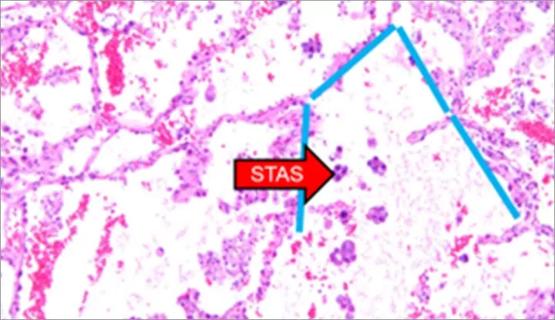
Young age, solid tumor, high uptake on PET and KRAS mutation signal risk, suggest need for lobectomy
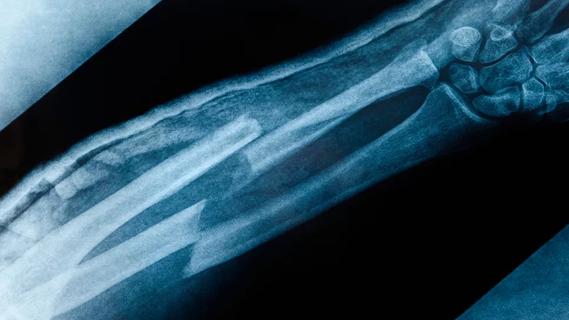
Surprise findings argue for caution about testosterone use in men at risk for fracture
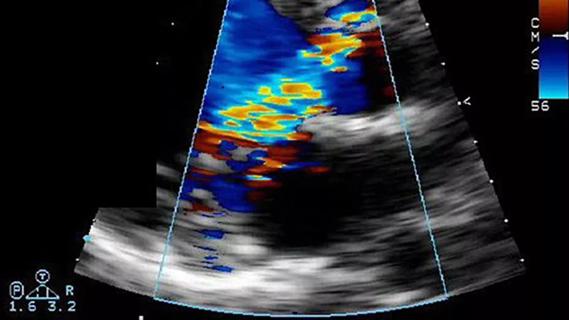
Residual AR related to severe preoperative AR increases risk of progression, need for reoperation

Findings support emphasis on markers of frailty related to, but not dependent on, age
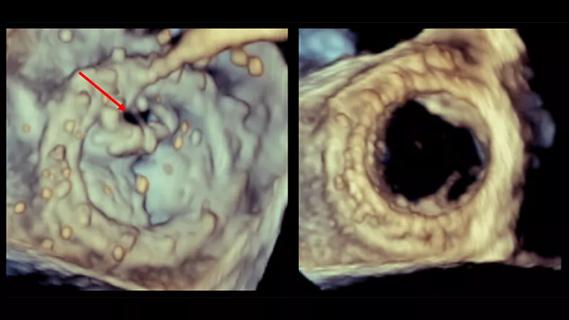
Provides option for patients previously deemed anatomically unsuitable
 Search