Locations:





Ongoing COMMENCE trial to confirm whether it delivers promised durability
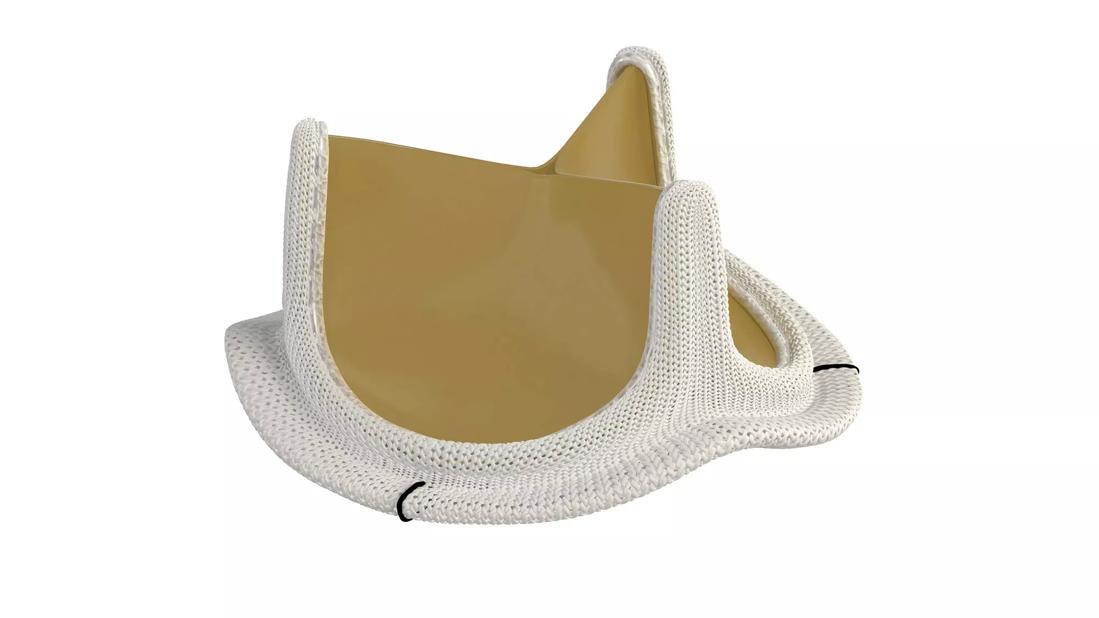
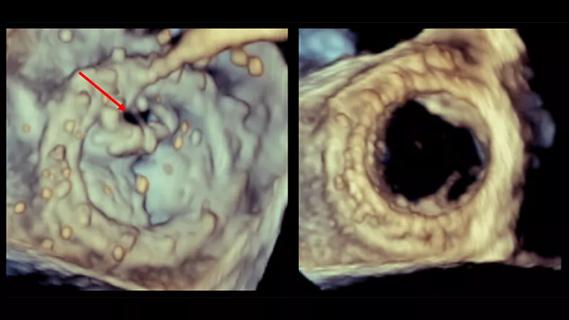
Image content: This image is available to view online.
View image online (https://assets.clevelandclinic.org/transform/cc54f391-e33e-4610-a73d-24373bcfb846/inspiris-valve-outside-view-12-HR_jpg)
inspiris-valve-outside-view-12-HR
The July FDA approval of the Inspiris Resilia aortic valve may signal an important advance toward more-durable bioprosthesis options for younger patients requiring aortic valve replacement (AVR), including potential enhanced suitability for future valve-in-valve procedures.
Advertisement
Cleveland Clinic is a non-profit academic medical center. Advertising on our site helps support our mission. We do not endorse non-Cleveland Clinic products or services. Policy
That’s the take of cardiothoracic surgeon Lars Svensson, MD, PhD, an investigator with the ongoing multicenter COMMENCE trial that helped form the basis for approval of the new bovine pericardial bioprosthesis. “If this valve holds up over time, we see tremendous potential for its use in younger patients,” says Dr. Svensson, Chair of Cleveland Clinic’s Sydell and Arnold Miller Family Heart & Vascular Institute.
This potential stems from the valve’s anticipated anti-calcification properties made possible in part by dry-storage technology developed at Cleveland Clinic. That technology is one aspect of the new valve’s Resilia bovine tissue technology — a combination of proprietary processes for tissue treatment and storage — that distinguishes it from other aortic bioprostheses to date.
The new bioprosthesis, manufactured by Edwards Lifesciences and shown in the photo above, builds the Resilia technology onto the platform of Edwards’ established Perimount valve design, along with an expandable frame.
The tissue technology is designed to resist the process of gradual calcification that can occur after about 20 years in other bovine pericardial bioprostheses, resulting in structural valve deterioration and tissue failure that may require repeat AVR. The risk is higher in patients who undergo AVR before age 60. A more durable valve could reduce the need for reoperation.
Tissue preservation techniques employing aldehydes are thought to be primarily responsible for attracting calcium from the blood to deposit on valve leaflets. Resilia tissue is preserved with glycerol, which removes aldehydes from the equation. It also allows for dry storage and eliminates the need to rinse the valve before implantation. Dry storage gives valves a longer shelf life and makes them less costly to store and transport.
Advertisement
“In animal studies, the treatment process strongly reduced calcification of the leaflets,” notes Dr. Svensson. “Encouraging data have also come from human studies in Eastern Europe.”
Recent approval in the U.S. was based on two-year results from the COMMENCE study, which were published in June in the European Journal of Cardio-Thoracic Surgery with Dr. Svensson as a co-author.
COMMENCE is a single-arm investigational device exemption (IDE) trial in which 689 patients underwent surgical AVR with the Inspiris Resilia valve. Mean patient age was 67 ± 11.6 years.
Thirty-day and two-year mortality and complication rates were very low. Moreover, no structural valve deterioration, valve thrombosis or nonstructural valve dysfunction was seen over the two-year follow-up to date.
“The results of open surgical AVR were uniformly excellent,” says Dr. Svensson, but he adds that longer follow-up will be needed to draw conclusions about the valve’s durability.
“At 10 years, we may not see a difference in durability between dry and wet technology,” he observes, “but I expect we will start to see a separation at 15 years. The long-term data in young patients will be interesting. A more durable valve would be a game changer.”
In addition to having leaflets designed for greater calcium resistance, the Inspiris Resilia valve includes an expandable frame designed to facilitate future valve-in-valve procedures. Dr. Svensson welcomes this innovation.
“With the Edwards model 2700 [Perimount] valve, I could press down hard and feel the rubber ring at the base of the struts break open,” he explains. “This allowed me to stretch the valve and make it bigger for a valve-in-valve procedure. Until now, we couldn’t do this with the newer valves, which are more rigid.”
Advertisement
In three major studies of valve-in-valve procedures, the mortality rate was 2 percent. This is considered an excellent outcome, Dr. Svensson notes, yet it’s higher than Cleveland Clinic’s 1 to 2 percent mortality for reoperations with a bioprosthetic valve — a rate that dropped to 0 percent in 2016.
“Nevertheless, a valve with greater pliability would allow us to use it in more patients,” he remarks.
The COMMENCE trial is scheduled to continue through 2026 and includes plans for evaluation of a mitral valve created with Resilia tissue. Cleveland Clinic expects to be involved in these trials.
Based on Edwards’ history of conducting long-term follow-up on study participants, Dr. Svensson expects the company’s interest in the trial’s AVR arm to continue. And while the Resilia technology was developed for open AVR, he says it will likely be adapted for use in transcatheter AVR, spawning more studies.
Meanwhile commercial launch of the Inspiris Resilia valve in the U.S. is expected in early 2018. The valve was cleared for European use in 2016.
Photo of Inspiris Resilia valve courtesy of Edwards Lifesciences.
Advertisement
Advertisement
A sampling of outcome and volume data from our Heart & Vascular Institute
Concomitant AF ablation and LAA occlusion strongly endorsed during elective heart surgery
Large retrospective study supports its addition to BAV repair toolbox at expert centers
Young age, solid tumor, high uptake on PET and KRAS mutation signal risk, suggest need for lobectomy
Surprise findings argue for caution about testosterone use in men at risk for fracture
Residual AR related to severe preoperative AR increases risk of progression, need for reoperation
Findings support emphasis on markers of frailty related to, but not dependent on, age
Provides option for patients previously deemed anatomically unsuitable
 Search