Locations:





Veteran nurse is first section head in pediatrics

Image content: This image is available to view online.
View image online (https://assets.clevelandclinic.org/transform/15695519-bf94-471b-add8-2afb6216677f/New-Appointment-690x380_jpg)
New-Appointment-690×380
In September, Catherine Quinn-Welsh, CNP, RN, was appointed section head of Community Pediatrics at the Chagrin Falls Family Health Center. She is the first nurse to land that position within the Cleveland Clinic healthcare system. Physicians serve as section heads of Community Pediatrics at the other 17 family health centers across Northeast Ohio.
Advertisement
Cleveland Clinic is a non-profit academic medical center. Advertising on our site helps support our mission. We do not endorse non-Cleveland Clinic products or services. Policy
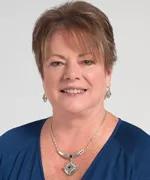
Image content: This image is available to view online.
View image online (https://assets.clevelandclinic.org/transform/92572a82-d287-4b3f-9aec-e0ccfb317595/Catherine-Quinn-Welsh_inset_jpg)
Cathrine Quinn-Welsh, CNP
“Having advanced practice nurses [APNs] become a strong force within our pediatrics practices just makes sense,” says Deb Lonzer, MD, FAAP, Chair of the Department of Community Pediatrics at Cleveland Clinic Children’s. “It’s good for patients, and it’s good for the department – and excellence should never go unrewarded.”
Dr. Lonzer says the section head is “part cheerleader, part communicator and part scheduler.” Among her tasks, Quinn-Welsh attends bimonthly section head meetings, where she receives information on systemwide initiatives then shares it with the Chagrin Falls Pediatrics Team. She also adjusts and approves team members’ schedules to ensure patient access and facilitates participation in community events to support the family health center’s commitment to children and boost awareness of its pediatric services.
“I am honored and proud to be named the first APN section head,” says Quinn-Welsh. She has certainly earned the leadership position. Quinn-Welsh has been an RN for 38 years and an APN for 24 years. She helped develop the APN role in the inpatient setting at both Mt. Sinai Medical Center in Cleveland and Cleveland Clinic’s Hillcrest Hospital. In 2012, she moved to the outpatient setting at Chagrin Falls Family Health Center. Quinn-Welsh became the first provider to offer care on Cleveland Clinic’s recently launched school-based healthcare mobile unit. “I thrive on new projects and challenges,” she says.
“She makes things happen,” says Dr. Lonzer. “When you need something, Cathy is right there for you. I can rely on her to take care of anything I need at the Chagrin Falls Family Health Center.”
Advertisement
“I don’t think you’ll find a single individual in pediatrics who wouldn’t say our nurses make us,” says Dr. Lonzer. “As physicians, we are in the room with patients for less and less time. We rely on our RNs, LPNs and APNs to do a great deal of communication, patient support and patient education. Nurses are the necessary and unsung heroes of pediatric practices.”
Even with such high praise for nurses in the clinical setting, Dr. Lonzer admits she didn’t think about having APNs in a leadership role until the past year, when she looked across the healthcare system and realized how many talented advanced practice nurses work at Cleveland Clinic. Quinn-Welsh may be the first APN section head in Community Pediatrics, but she probably won’t be the last. “Cathy has done such a good job that as I look at strategic operations for the department, I would certainly consider an experienced APN with leadership capabilities as section head at other sites,” says Dr. Lonzer.
One of the key messages in the Institute of Medicine’s 2010 Future of Nursing report is that nurses should practice to the full extent of their training and education. This includes serving in leadership roles, such as Quinn-Welsh is now doing as section head of Community Pediatrics at the Chagrin Falls Family Health Center.
“APNs and physicians are a team in pediatrics at Cleveland Clinic, and we work incredibly well together,” says Dr. Lonzer. “I think it’s important for our APNs to anticipate that if they work hard, there will be leadership roles open to them in addition to patient care. It makes us all better.”
Advertisement
Advertisement
Advertisement

Nurses play key role in comprehensive lifetime treatment program
Customized bots improve speed, efficiency by streamlining daily clinical, clerical tasks
Nurses play pivotal role in patients’ ability to recover in the comfort of their own homes
New protocol reduces costs, increases patient and caregiver satisfaction

Advocating for patient safety is imperative in fast-paced surgical settings

M-Power program improves the perinatal experience for people who have survived abuse

Advice for those pursuing a WOC nursing career

Veteran nurse shares his experience as a caregiver and community volunteer
 Search