Locations:





Continued research and collaboration are key to progress in diagnosis and treatment
Podcast content: This podcast is available to listen to online.
Listen to podcast online (https://www.buzzsprout.com/2243576/13534541)
Outcomes for patients with intracranial hemorrhage (ICH) can be improved by skilled surgical and intensive care, but few recent advancements have been made to move the needle on these patients’ prognosis.
Advertisement
Cleveland Clinic is a non-profit academic medical center. Advertising on our site helps support our mission. We do not endorse non-Cleveland Clinic products or services. Policy
“Prevention is key for this disease,” says Joao Gomes, MD, a vascular neurologist and neurocritical care specialist at Cleveland Clinic. “However, even if you control blood pressure in the population at large, you’re still going to have patients who for one reason or another will experience intracranial hemorrhage. So we still need to find effective therapies.”
In the latest episode of Cleveland Clinic’s Neuro Pathways podcast, Dr. Gomes joins Mark Bain, MD, Head of Cerebrovascular and Endovascular Neurosurgery at Cleveland Clinic, to examine the future of ICH diagnosis and treatment. They discuss:
Click the podcast player above to listen to the episode now, or read on for an edited excerpt. Check out more Neuro Pathways episodes at clevelandclinic.org/neuropodcast or wherever you get your podcasts.
Dr. Bain: As a field, intracerebral hemorrhage is sort of where stroke was in 2013. We don’t necessarily understand the proper patients to operate on. We’re still honing our techniques surgically, and we don’t truly understand what the inflammatory cascade is around these hematomas and how we can help patients by stopping inflammation. So I think the next five to 10 years in this space are going to be absolutely fascinating.
Advertisement
We’re working on better devices. We can even do this through endoscopic approaches where we can make small burr holes, placing these little tubes about as big as a straw down into the hemorrhage, and remove the hemorrhage with minimal collateral damage to the surrounding brain. So the hope there is that you can stop pressure on the surrounding neurons and the surrounding white matter tracts. By getting the hematoma out, we can reduce the edema and the swelling reaction that happens and the secondary injury.
And we have even done research looking at spot signs. These are active extravasations of contrast on CAT scans that suggest there is active bleeding happening. And we know very well that if we leave those alone, those hemorrhages will continue to expand and the patient outcome will most likely be fatal. So we have actively targeted those spot signs with our devices and found bleeding vessels that we can coagulate and stop the hematoma from expanding.
These are all therapeutic windows where we can potentially interact. The challenge now is to hone these skills and make them standard across practitioners so we can study them. And then we need well-designed randomized trials to prove that this is working.
Advertisement
Advertisement

New study advances understanding of patient-defined goals

Testing options and therapies are expanding for this poorly understood sleep disorder
Real-world claims data and tissue culture studies set the stage for randomized clinical testing
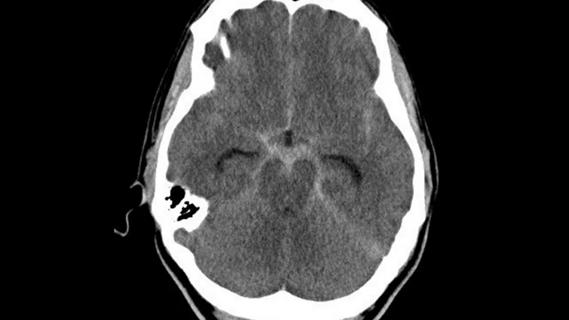
Digital subtraction angiography remains central to assessment of ‘benign’ PMSAH

Cleveland Clinic neuromuscular specialist shares insights on AI in his field and beyond
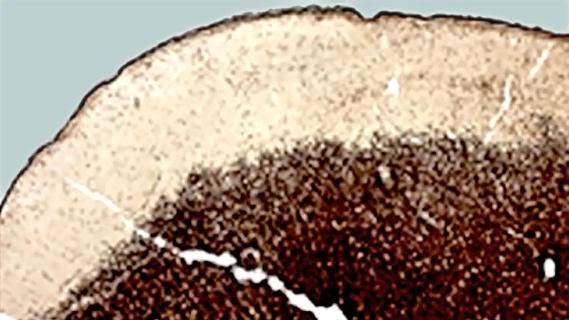
Findings challenge dogma that microglia are exclusively destructive regardless of location in brain

Neurology is especially well positioned for opportunities to enhance clinical care and medical training
New review distills insights from studies over the past decade
 Search