Locations:





 Search
Features range from water ultra-filtration to heated seats
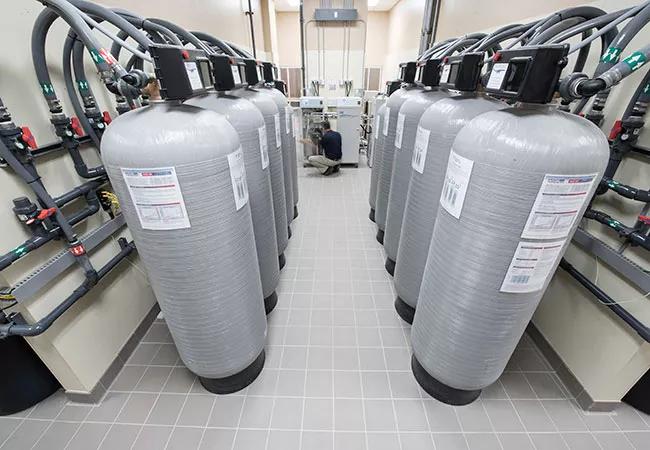
Image content: This image is available to view online.
View image online (https://assets.clevelandclinic.org/transform/c6831293-32b6-4bff-8c4c-c2583acc54c7/650x450-Advanced-Dialysis-Center_jpg)
650×450-Advanced Dialysis Center
The water that flows from a household faucet is heavily filtered, but impurities remain — microbes; trace elements such as lead, zinc and copper from piping; and treatment additives like chlorine, fluoride and aluminum.
Advertisement
Cleveland Clinic is a non-profit academic medical center. Advertising on our site helps support our mission. We do not endorse non-Cleveland Clinic products or services. Policy
In miniscule amounts, these contaminants shouldn’t pose problems for a healthy adult.
But a kidney disease patient undergoing hemodialysis is exposed to as many as 32 gallons of water in each treatment session, three times a week. That large volume concentrates exposure to waterborne contaminants and amplifies their potential harm, making extra filtration critical to the dialysis process.
Fortunately, among the many highlights of Cleveland Clinic’s new dialysis facility, Cleveland Clinic East, is one of the nation’s most advanced water filtration systems for hemodialysis.
The AquaBplus filtration system consists of two pairs of dual-pass reverse osmosis membranes to supply ultra-purified water to the facility’s 56 hemodialysis stations.
“This is completely new technology for the United States,” says Medical Director Robert Heyka, MD, Chairman, Glickman Urological & Kidney Institute’s Department of Nephrology and Hypertension.
The system uses heat disinfection rather than chemicals, increasing efficiency and patient and employee safety. Equipment automation and programmability create the scheduling flexibility to allow nocturnal hemodialysis at the new center, a first for patients on Cleveland’s East Side.
Overnight dialysis, conducted in seven- to eight-hour sessions rather than the usual four, increases the amount of waste removal from larger patients, helping them feel better. For all patients, it frees up daytime hours for work or other activities.
The two-level, 32,575-square-foot facility, a joint venture of Cleveland Clinic, Fresenius Kidney Care and the MetroHealth System operating as Ohio Renal Care Group, is purpose-built for dialysis care.
Advertisement
Hemodialysis stations are on the first level, making access easy for patients with mobility issues. Expansive windows, a waiting area with a fireplace and outdoor picnic tables maximize patient and caregiver well-being.
Dialysis chairs are heated, reclining and massaging and are equipped with TVs and internet access. “Sitting in a dialysis chair for four hours is like taking a cross-country flight three times a week,” Dr. Heyka says. “We’re going from coach to first-class in terms of improving our patients’ comfort.”
The facility’s upper level houses services for home-dialysis patients, including training areas for peritoneal dialysis and hemodialysis, along with exam rooms for appointments with physicians, nurse practitioners, dietitians and social workers.
“Cleveland Clinic East will be the premier dialysis facility in Northeast Ohio,” Dr. Heyka says. “It will expand the number of patients we’re able to treat, and will improve their care and comfort.”
Advertisement
Advertisement

Clinicians should individualize dosing practices based on patient risk factors and preferences
Pioneering and refining the approach in pyeloplasty, nephrectomy and more
Fully-automated process uses preop CT, baseline GFR to estimate post-nephrectomy renal function
Could mean earlier treatment, but also could have negative effects

Unlike earlier pills, new drugs do not cause liver toxicity
Male factors play a role in about half of all infertility cases, yet men often are not evaluated
Surgeons choreograph nearly simultaneous procedures, sharing one robot between two patients

Identifying barriers in the renal genetic assessment of Black patients