Locations:





A veteran clinician shares insights on the care-enhancing qualities of tech
“There’s a potentially large place for technology in multiple sclerosis [MS] rehabilitation, but we have to understand that it’s in partnership with the people who have MS and their families, who are the ones to decide how best it can help them.” That’s a takeaway shared by Francois Bethoux, MD, Director of Rehabilitation Services in Cleveland Clinic’s Mellen Center for Multiple Sclerosis, in the newest episode of Cleveland Clinic’s peer-to-peer Neuro Pathways podcast.
Advertisement
Cleveland Clinic is a non-profit academic medical center. Advertising on our site helps support our mission. We do not endorse non-Cleveland Clinic products or services. Policy
In the podcast, Dr. Bethoux — who is also Chair of Cleveland Clinic’s Department of Physical Medicine and Rehabilitation, as well as Medical Director of its Arts & Medicine Institute — shares perspectives on the adoption of new technologies for MS rehabilitation. The discussion touches on a range of issues, including:
Click the player below to listen to the 19-minute podcast now, or read on below for a short edited excerpt from the portion exploring powered exoskeletons. Check out more Neuro Pathways episodes at clevelandclinic.org/neuropodcast or wherever you get your podcasts.
Podcast content: This podcast is available to listen to online.
Listen to podcast online (https://www.buzzsprout.com/2243576/13534582)
Dr. Bethoux: The idea with the exoskeleton is to have a robotic brace, a brace that encapsulates the legs up to the hips and pelvis, and then motors that can activate the joints of the device to help the joints of the leg move, and a complex software that responds to what sensors can catch. If the person intends to make a step, they will move their body in such a way that if the sensor catches it, then it will trigger a step assisted by the device.
It’s a way to have a machine that interacts with the person and can interact with the environment. It has safety features to prevent falling, for example, and can enhance the person’s abilities. So if the person has weakness in the legs, then the machine can do some of the walking for the person. If they become more and more tired as they walk a longer distance, the machine can take over more and more, or vice versa. If they become stronger as they walk more, then the machine will provide less assistance. For example, if with training from session to session the person becomes more adept at walking, then we can provide less and less assistance until they can do their training without the machine.
Advertisement
The idea is that the machine is really not the end of it all, and that’s really what I’ve learned through research with almost any technology. The technology is an enabler or an enhancer. It’s something that allows people to perform exercise, rehabilitation or certain functions of life in an easier way. It doesn’t replace; it just enhances. But it can enhance in such a way that it makes a meaningful difference to the person.
Advertisement
Advertisement
New study advances understanding of patient-defined goals
Testing options and therapies are expanding for this poorly understood sleep disorder
Real-world claims data and tissue culture studies set the stage for randomized clinical testing
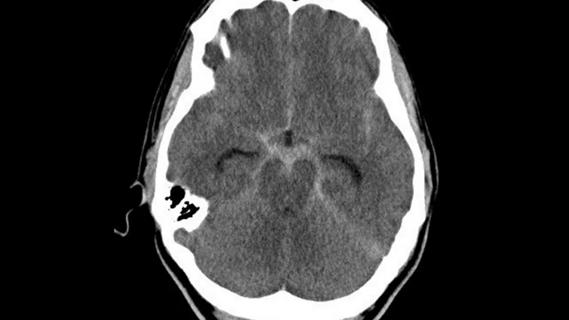
Digital subtraction angiography remains central to assessment of ‘benign’ PMSAH
Cleveland Clinic neuromuscular specialist shares insights on AI in his field and beyond
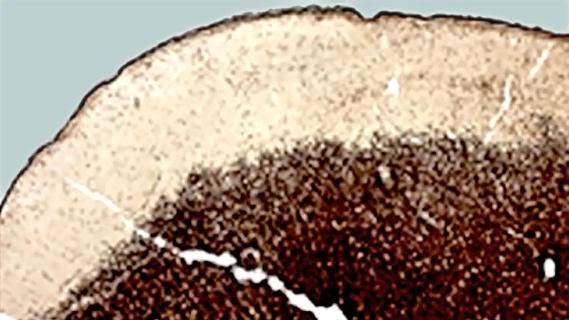
Findings challenge dogma that microglia are exclusively destructive regardless of location in brain
Neurology is especially well positioned for opportunities to enhance clinical care and medical training
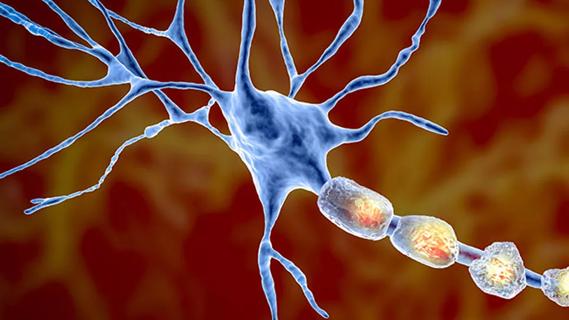
New review distills insights from studies over the past decade
 Search