Locations:





Check out one of the first episodes of our ‘Neuro Pathways’ podcast
Eighteen minutes of catching up on developments in the acute treatment of ischemic stroke. That’s what’s in store from one of the first episodes of Cleveland Clinic Neurological Institute’s new “Neuro Pathways” podcast for healthcare professionals.
Advertisement
Cleveland Clinic is a non-profit academic medical center. Advertising on our site helps support our mission. We do not endorse non-Cleveland Clinic products or services. Policy
Podcast host Alex Rae-Grant, MD, a staff neurologist in the Neurological Institute, asks interventional neurologist M. Shazam Hussain, MD, Director of Cleveland Clinic’s Cerebrovascular Center, to debrief him on the recent evolution of acute stroke management. They cover a number of topics, with Dr. Hussain sharing perspectives on the following:
Here’s a short sample of their exchange:
Dr. Rae-Grant: Let’s say I have an acute ischemic stroke. How many hours out could you potentially do an endovascular intervention?
Dr. Hussain: The thinking on this has changed a lot over time. Initially we were very time-based and had strict time windows. We used to say we could offer mechanical thrombectomy only within the first six hours after stroke symptom onset. That was largely due to fear of potentially causing hemorrhagic transformation once the blood vessel was opened, with possible bleeding into the brain resulting from the restored blood flow. With time we have found that we are able to use imaging modalities to identify patients who have a small core infarction as well as a lot of brain that can be saved irrespective of where they are in the time window. Those patients’ blood vessels can still be safely opened up beyond the six-hour window with what seems to be a quite low risk of hemorrhagic transformation.
Advertisement
As a result, in contrast to offering therapy in just the first six hours, we now have clinical trials that have established that offering therapy up to 16 and 24 hours after symptom onset is a safe paradigm and is actually highly effective in improving patients’ outcomes. In fact, there even have been cases where patients with a small core infarction and a large area with lack of perfusion (indicating a lot of penumbral tissue to be saved) have had blood flow successfully restored after more than 24 hours have passed since symptom onset.
Listen to the full 18-minute podcast on the player below. Check out more of Cleveland Clinic’s “Neuro Pathways” podcast episodes at clevelandclinic.org/neuropodcast or subscribe wherever you get your podcasts.
Podcast content: This podcast is available to listen to online.
Listen to podcast online (https://www.buzzsprout.com/2243576/13534594)
Advertisement
Advertisement

New study advances understanding of patient-defined goals
Testing options and therapies are expanding for this poorly understood sleep disorder
Real-world claims data and tissue culture studies set the stage for randomized clinical testing
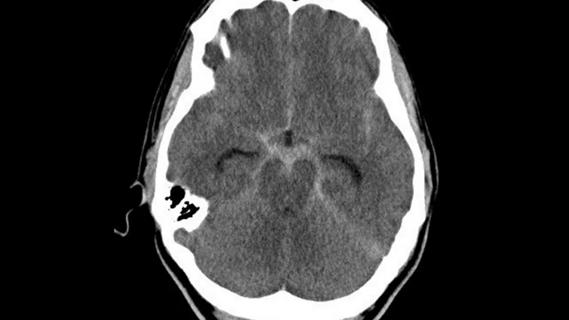
Digital subtraction angiography remains central to assessment of ‘benign’ PMSAH

Cleveland Clinic neuromuscular specialist shares insights on AI in his field and beyond
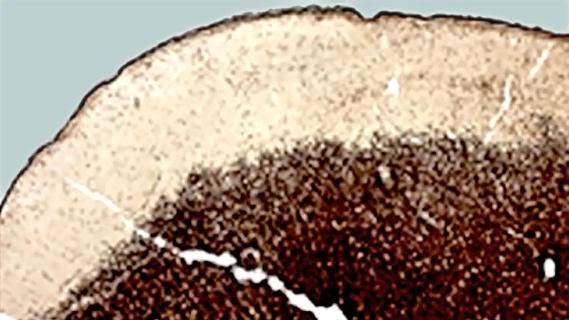
Findings challenge dogma that microglia are exclusively destructive regardless of location in brain
Neurology is especially well positioned for opportunities to enhance clinical care and medical training
New review distills insights from studies over the past decade
 Search