Locations:





New episode of ‘Neuro Pathways’ podcast keeps you current on emerging insights
Is Parkinson disease (PD) truly a single illness or rather a collection of several variants with different manifestations? That’s one of the questions explored in a probing discussion of our evolving understanding of PD with international expert Hubert Fernandez, MD, in a new episode of Cleveland Clinic’s “Neuro Pathways” podcast for healthcare professionals.
Advertisement
Cleveland Clinic is a non-profit academic medical center. Advertising on our site helps support our mission. We do not endorse non-Cleveland Clinic products or services. Policy
In the 20-minute episode, podcast host Alex Rae-Grant, MD, engages Dr. Fernandez, Director of Cleveland Clinic’s Center for Neurological Restoration, on a number of timely topics in the field, including:
Click the player below to listen to the podcast now, or read on below for a short excerpt — in edited transcript form — of the discussion that’s in store. You can check out more “Neuro Pathways” episodes at clevelandclinic.org/neuropodcast or wherever you get your podcasts.
Podcast content: This podcast is available to listen to online.
Listen to podcast online (https://www.buzzsprout.com/2243576/13534590)
Dr. Fernandez: What we have come to really appreciate in the last decade or so is how much more there is to Parkinson disease than just the motor symptoms associated with the condition. What is moving the needle earlier and earlier in the diagnosis of Parkinson disease is a recognition of what are called the premotor symptoms of Parkinson disease. They can occur decades before the onset of the first shaking of a pinky finger or the softening of a patient’s voice. These nonmotor symptoms — we call them premotor symptoms or the prodromal stage of Parkinson disease — include constipation, REM behavior disorder (where patients act out their dreams involuntarily), depression and anxiety. Identifying these early symptoms is relevant because in our quest to find disease-modifying therapies, we have to really try to attack the disease as early as possible to give us the best chance of slowing disease progression or even stopping it altogether.
Advertisement
Advertisement

New study advances understanding of patient-defined goals
Testing options and therapies are expanding for this poorly understood sleep disorder
Real-world claims data and tissue culture studies set the stage for randomized clinical testing
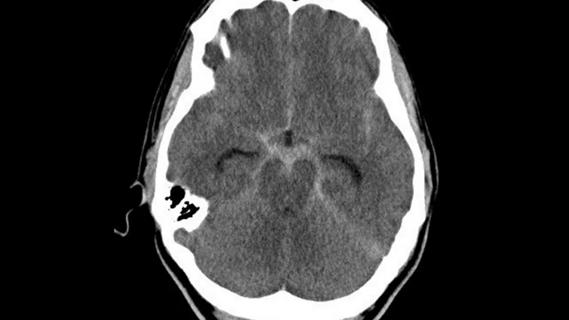
Digital subtraction angiography remains central to assessment of ‘benign’ PMSAH

Cleveland Clinic neuromuscular specialist shares insights on AI in his field and beyond
Findings challenge dogma that microglia are exclusively destructive regardless of location in brain

Neurology is especially well positioned for opportunities to enhance clinical care and medical training
New review distills insights from studies over the past decade
 Search