Locations:





Study focuses on time interval between LV and aortic systolic pressure peaks
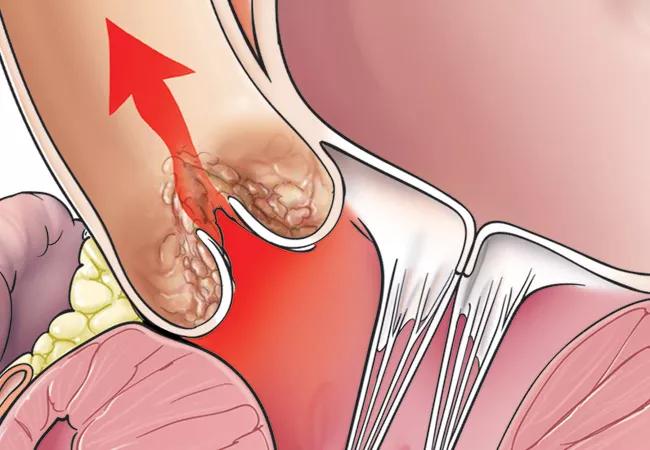
Image content: This image is available to view online.
View image online (https://assets.clevelandclinic.org/transform/f209c9fd-47f0-48b6-9f28-4b9899bfebeb/19-HRT-530-aortic-stenosis-650x450_jpg)
19-HRT-530-aortic stenosis-650×450
The time between left ventricular (LV) and aortic systolic pressure peaks appears to be a more sensitive measure for assessing anatomic deformation of the aortic valve compared with conventional echocardiographic parameters, particularly in patients who have low-gradient aortic stenosis (AS).
Advertisement
Cleveland Clinic is a non-profit academic medical center. Advertising on our site helps support our mission. We do not endorse non-Cleveland Clinic products or services. Policy
So suggests a Cleveland Clinic observational cohort study published online by JAMA Cardiology on May 1, 2019. If confirmed in larger prospective studies, the findings could translate to the use of this catheter-based hemodynamic index as an additional surrogate marker for identifying low-gradient true severe AS.
“The diagnosis of low-gradient severe aortic stenosis is a challenging one,” says the study’s corresponding author, Samir Kapadia, MD, Chair of Cardiovascular Medicine at Cleveland Clinic. “The echocardiographic parameters used are flow-dependent, which means that patients who have severe aortic stenosis along with reduced ejection fraction or low flow status may show a lower pressure gradient and therefore not meet guideline-based criteria for severe aortic stenosis.”
Studies suggest that up to half of patients with severe AS may demonstrate a low pressure gradient, he notes, and that prolonged ejection time and delayed peak velocity on echocardiography are associated with AS severity.
“We undertook this study based on a hypothesis that the time between LV and aortic systolic pressure peaks [TLV–Ao] is associated with greater severity of aortic stenosis, particularly in patients with a low mean pressure gradient,” Dr. Kapadia continues. “This is, in a way, quantitative analysis of the well-known clinical sign that astute clinicians note as ‘delayed carotid upstroke’ on physical exam.”
He and colleagues retrospectively reviewed the records of 123 consecutive patients with severe AS who underwent transcatheter aortic valve replacement (TAVR) at Cleveland Clinic that included pre-TAVR cardiac CT evaluation and hemodynamic assessment via left heart catheterization immediately before and during TAVR. All patients underwent comprehensive echocardiographic assessment and had aortic valve calcification assessed by multidetector CT. Patients (mean age, 82 years; 54% male) were seen over a 9.5-month period in 2015-2016.
Advertisement
The primary objective was to assess for any relation between the time interval between LV and aortic systolic pressure peaks [TLV–Ao] and aortic valve calcification or other traditional imaging parameters.
Of the 123 patients, 48 (39%) had low-gradient AS, defined as a mean pressure gradient < 40 mm Hg. Analysis showed that the mean (SD) TLV–Ao value for the entire cohort was 69 (39) milliseconds.
On multivariable logistic regression analysis, the following factors were found to be independently associated with severe aortic valve calcification:
Notably, adding TLV–Ao to peak aortic valve velocity and aortic valve area yielded significant incremental value for detection of aortic valve calcification.
More notably, in the subpopulation with low-gradient AS, higher TLV–Ao was the sole parameter assessed that was significantly associated with severe aortic valve calcification.
“This is the first study we know of to demonstrate that directly measured TLV–Ao is significantly associated with aortic valve calcification as calculated using multidetector CT,” observes co-author Lars Svensson, MD, PhD, a cardiothoracic surgeon and Chair of Cleveland Clinic’s Miller Family Heart & Vascular Institute. “These findings suggest that this new catheter-based hemodynamic index might serve to add incremental value over conventional echocardiographic variables in detecting significant aortic valve calcification.”
“Doppler-based hemodynamic evaluation of the severity of aortic stenosis can be greatly limited by discrepancies, particularly in patients with low-gradient aortic stenosis,” adds Dr. Kapadia. While he cautions that his team’s single-center, observational findings need to be validated in larger prospective studies, he says they signal real potential. “If these results are confirmed, the time interval between LV and aortic systolic pressure peaks could prove to be a helpful new tool in the diagnosis and prognosis of aortic stenosis in patients with a low pressure gradient or inconclusive echocardiographic findings.”
Advertisement
“This study also may suggest a two-way road for clinicians to accurately assess degree of aortic stenosis,” observes co-author Wael Jaber, MD, a cardiologist in Cleveland Clinic’s Section of Cardiovascular Imaging. “If a high TLV–Ao value is noted, assessment of calcification by CT is warranted. If heavy calcification by CT is noted first and echo-derived variables are inconsistent, invasive hemodynamic measurements may help unmask severe aortic stenosis.”
Advertisement
Advertisement

A sampling of outcome and volume data from our Heart & Vascular Institute
Concomitant AF ablation and LAA occlusion strongly endorsed during elective heart surgery
Large retrospective study supports its addition to BAV repair toolbox at expert centers
Young age, solid tumor, high uptake on PET and KRAS mutation signal risk, suggest need for lobectomy
Surprise findings argue for caution about testosterone use in men at risk for fracture
Residual AR related to severe preoperative AR increases risk of progression, need for reoperation

Findings support emphasis on markers of frailty related to, but not dependent on, age
Provides option for patients previously deemed anatomically unsuitable
 Search