Locations:





Large cohort study finds widespread LV impairment and details racial and genetic differences
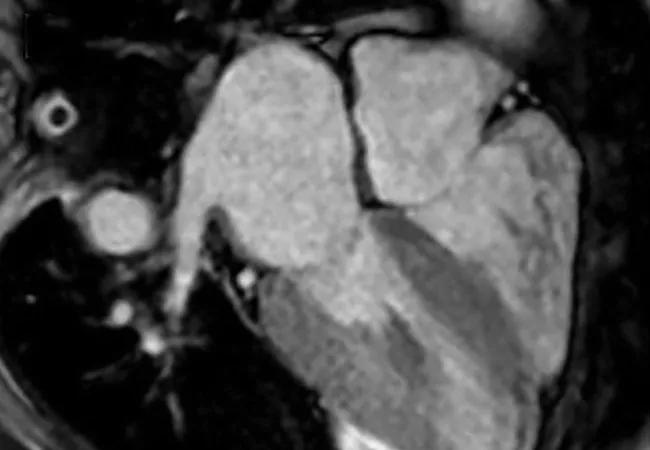
Image content: This image is available to view online.
View image online (https://assets.clevelandclinic.org/transform/fac2ad82-d4df-43c8-834e-2a709419dfd6/22-HVI-3285572_ATTR-CM_650x450_jpg)
22-HVI-3285572_ATTR-CM_650x450
Nearly one-half of patients with transthyretin cardiac amyloidosis (ATTR-CM) in a racially and genetically diverse cohort presented with impaired left ventricular ejection fraction (LVEF), reports a team of Cleveland Clinic cardiologists, and over one-quarter presented with heart failure with reduced ejection fraction (HFrEF).
Advertisement
Cleveland Clinic is a non-profit academic medical center. Advertising on our site helps support our mission. We do not endorse non-Cleveland Clinic products or services. Policy
“ATTR-CM has traditionally been thought of as a form of heart failure with preserved ejection fraction [HFpEF] and severe diastolic dysfunction despite the fact that patients may present with reduced LVEF, as is made clear by our findings,” says Trejeeve Martyn, MD, first author of the retrospective study, which was published as a research letter in JACC: Heart Failure (2022;10:689-691). “This argues for broader diagnostic suspicion for ATTR-CM regardless of a patient’s ejection fraction.”
“We undertook this study to better determine the prevalence and clinical outcomes of patients with ATTR-CM who present with varying degrees of LVEF and to assess for differences by patient race and genotype,” notes the study’s senior author, W.H. Wilson Tang, MD. “We found that African American patients with ATTR-CM were more likely than Caucasian patients to present with HFrEF in both wild-type and hereditary forms of the disease, which is a novel finding.”
The researchers analyzed consecutive adult patients with ATTR-CM enrolled in Cleveland Clinic’s amyloidosis registry from January 2008 through May 2021. ATTR-CM diagnosis was determined through endomyocardial biopsy or 99mTc-pyrophosphate scanning combined with single-photon emission computed tomography. LVEF was adjudicated based on echocardiographic findings closest to the time of diagnosis.
Heart failure phenotypes and outcomes were assessed in terms of patients’ LVEF categories, as follows:
Advertisement
Patients were further compared according to their self-identified race and their genotype, with assignment into one of four groups:
The study’s primary endpoint was a composite of death, heart transplant or left ventricular assist device (LVAD) placement. Multivariable logistic regression analysis was used to assess the relationship between HFrEF at presentation and patient features. Survival was assessed over the five years after ATTR-CM diagnosis, both without adjustment and with adjustment for age, sex, race, NT-proBNP, estimated glomerular filtration rate and use of tafamidis.
The study cohort’s 585 patients broke down as follows according to LVEF at presentation:
Multivariable analysis revealed the following factors to be associated with increased odds of HFrEF at enrollment:
African Americans were more likely than Caucasians to have hATTR (72% vs. 9%; P < 0.001), with most being associated with V122I sequence variants. African Americans also were more likely to present with HFrEF (41% vs. 23%; P < 0.001), regardless of genotype.
Across the cohort, 192 composite endpoint events occurred over follow-up, including 21 heart transplants and two LVAD implants. After adjustment for demographic and clinical variables, transplant/LVAD-free survival was significantly worse in patients presenting with HFrEF compared with those presenting with HFpEF (hazard ratio = 2.39; 95% CI, 1.67-3.40; P < 0.001). Adjusted survival did not differ significantly between the HFpEF and HFmrEF groups.
Advertisement
The study authors note that their report helps characterize ATTR-CM in terms of patients’ presenting LVEF and its relation to patient characteristics and outcomes. “Severely impaired LVEF is an independent prognostic factor in ATTR-CM,” they write.
The authors also point out that the limitations of their study’s single-center nature are somewhat offset by their cohort’s racial and genetic diversity. “This allowed us to establish an apparent increased likelihood of presentation with HFrEF among African American patients,” notes Dr. Martyn.
“This finding, which was independent of genetic subtypes, raises the prospect of more nuanced interactions among genetic variants, comorbidities and health disparities in ATTR-CM than was previously appreciated,” says study co-author Mazen Hanna, MD, Co-Director of Cleveland Clinic’s Amyloidosis Center. “The interplay among these factors is worthy of further study.”
Advertisement
Advertisement

After optimized medical and device therapy, is there a role for endocardial-epicardial VT ablation?

A sampling of outcome and volume data from our Heart & Vascular Institute

Concomitant AF ablation and LAA occlusion strongly endorsed during elective heart surgery

Large retrospective study supports its addition to BAV repair toolbox at expert centers

Young age, solid tumor, high uptake on PET and KRAS mutation signal risk, suggest need for lobectomy

Surprise findings argue for caution about testosterone use in men at risk for fracture
Residual AR related to severe preoperative AR increases risk of progression, need for reoperation

Findings support emphasis on markers of frailty related to, but not dependent on, age
 Search