Locations:





Working to avoid alarm fatigue
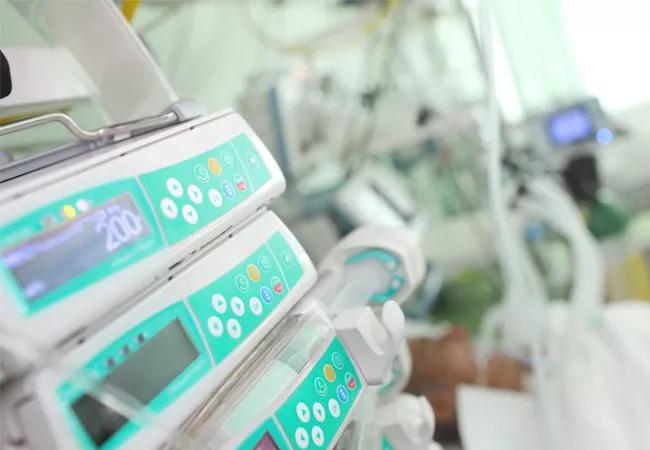
Image content: This image is available to view online.
View image online (https://assets.clevelandclinic.org/transform/22961f42-6eab-4cee-ad38-bac32f62997b/17-NUR-913-Hunter_Hero-Image_650x450pxl_jpg)
17-NUR-913-Hunter_Hero-Image_650x450pxl
Since the Joint Commission identified alarm fatigue as a national patient safety issue in 2014, hospitals across the country have been working to create effective alarm management policies to meet National Patient Safety Goals.
Advertisement
Cleveland Clinic is a non-profit academic medical center. Advertising on our site helps support our mission. We do not endorse non-Cleveland Clinic products or services. Policy
At Cleveland Clinic, a dedicated off-site central monitoring unit (CMU) provides 24/7 secondary cardiac telemetry monitoring for non-critically ill patients at the health system’s main campus and a number of regional hospitals. To avoid unnecessary monitoring of patients at low risk, the CMU team developed and rolled out standardized criteria for assigning patients to telemetry in 2014.
Even after revising telemetry monitoring use, nuisance alarms still accounted for 49 percent of all telemetry alarms outside of Cleveland Clinic’s intensive care units in 2015, averaging 14,000 alarms per month. In 2016, Associate Chief Nursing Officer Kim Hunter, DNP, MBA, RN, NEA-BC, Clinical Director of the Neurological and Orthopaedic & Rheumatologic Institutes, set out to complete a quality research study to examine differences in the rates of nuisance alarms between a 34-bed unit completing usual telemetry alarm management and a 34-bed unit that implemented a bundled telemetry alarm reduction intervention.
“Our goals for trying to reduce nuisance alarms were to give patients a more soothing environment in which to heal, give nurses fewer ‘false’ work interruptions, and allow CMU teams to focus on important alarms that require nurse follow-up,” says Dr. Hunter.
Using a two-group prospective, longitudinal design, the bundled intervention involved the following actions each day:
Advertisement
Further, nurses began routinely pausing telemetry at the central monitor when patients were off telemetry for more than two minutes.
“In nurse huddles we explained what we were doing, and we had a checklist next to the bedside as a reminder,” says Dr. Hunter. “Nurse managers enforced the new approach, which we hoped would ultimately save nurses time, with fewer interruptions and calls from the CMU, and improve patients’ rest.”
Telemetry alarm data were collected for four months – two months before and two months after intervention. Post intervention, the proportion of nuisance alarms was lower in the bundled-intervention group. The intervention was associated with a 29 percent decrease in the odds of nuisance alarm events.
“The bundled telemetry alarm intervention stabilized nuisance alarms during the two-month intervention period at a time when the usual care group had an increase in nuisance alarms,” says Dr. Hunter.
Intervention implementation should be supported for a longer period and across more units to better understand true effects. Ultimately, it is important for clinical nurses to develop new ways of solving old problems.
Jared Leal, BSN, RN, Nurse Manager of the intervention unit, says, “It may be that over time, we refine the bundled telemetry alarm intervention to make it even more valuable and less time intensive for nurses, but our current results provide a great starting point for changing practice.”
In addition to Dr. Hunter, the research team included Edward Mascha, PhD, and Nancy M. Albert, PhD, CCNS, CHFN, CCRN, NE-BC, FAHA, FCCM, FAAN.
Advertisement
Advertisement

Nurses play key role in comprehensive lifetime treatment program
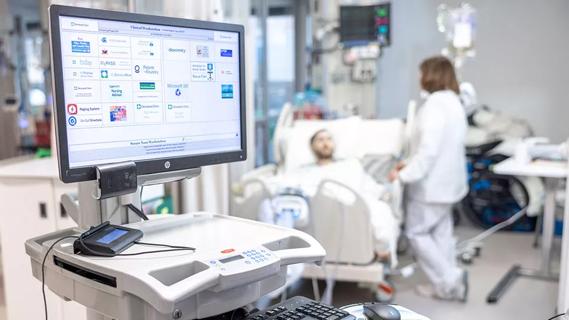
Customized bots improve speed, efficiency by streamlining daily clinical, clerical tasks
Nurses play pivotal role in patients’ ability to recover in the comfort of their own homes

New protocol reduces costs, increases patient and caregiver satisfaction

Advocating for patient safety is imperative in fast-paced surgical settings

M-Power program improves the perinatal experience for people who have survived abuse

Advice for those pursuing a WOC nursing career

Veteran nurse shares his experience as a caregiver and community volunteer
 Search