Locations:





From a comprehensive agenda to Cleveland’s late-September climate, this is not to be missed
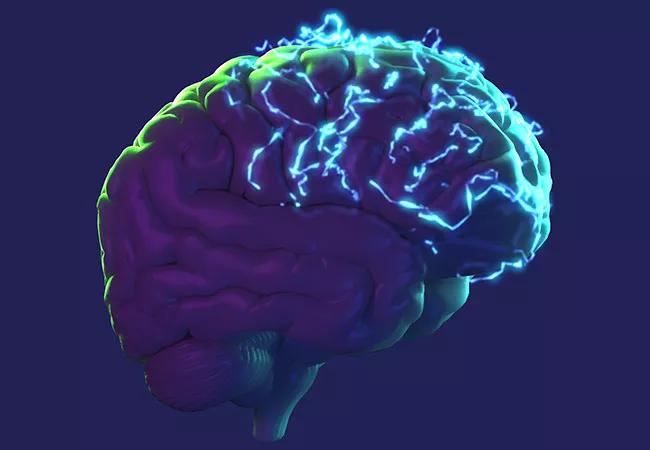
Image content: This image is available to view online.
View image online (https://assets.clevelandclinic.org/transform/4e466aaa-bfed-47a9-ad8c-d4a63d7f9a39/18-NEU-4808-Epilepsy-Brain-650x450_jpg)
18-NEU-4808 Epilepsy-Brain-650×450
Cleveland Clinic’s Neurological Institute will be assembling a faculty of more than two dozen epilepsy experts for the Cleveland Clinic Epilepsy Update & Review Course from Saturday morning, Sept. 22, to midday Monday, Sept. 24, at the InterContinental Hotel & Conference Center in Cleveland.
Advertisement
Cleveland Clinic is a non-profit academic medical center. Advertising on our site helps support our mission. We do not endorse non-Cleveland Clinic products or services. Policy
Here are six reasons adult and child neurologists and epileptologists are well advised to make time for this CME-certified event, whose full agenda and registration details are at ccfcme.org/epilepsyupdate18.
1) Serious attention to new diagnostic and treatment tools
With detailed sessions devoted to genetic test selection, evidence-based use of newer antiepileptic drugs, neurostimulation devices in epilepsy, novel post-processing imaging techniques and more, this course will bring providers and trainees up to speed on the very latest clinical tools for diagnosing and managing epilepsy across the life span.
2) Deep dives into epilepsy surgery evaluation and technique
The agenda is rich with insights and updates for medical specialists and neurosurgeons alike, punctuated throughout with tips for optimal interdisciplinary collaboration. Sessions are dedicated to an overview of principles for the presurgical evaluation as well as the role of specific technologies — such as nuclear imaging and multimodal imaging — in the presurgical evaluation. Further sessions explore intraoperative neurophysiologic tests, surgical techniques in lesional epilepsies, stereoelectroencephalography-based surgical techniques, and disconnective and laser ablation surgeries.
“Cleveland Clinic operates one of the highest-volume epilepsy surgery programs in the world,” says course director Ajay Gupta, MD, of Cleveland Clinic’s Epilepsy Center. “We are committed to sharing with the wider epilepsy community the lessons we’ve learned and the innovations we’ve helped pioneer for enhancing team-based epilepsy surgery care.”
Advertisement
3) Discussion of neglected topics
The scope of this 2.5-day course allows exploration of topics that many other CME offerings lack time for. Examples include sessions dedicated to genetic epilepsies, other distinctive epilepsies (neurocutaneous disorders and hypothalamic hamartoma), psychogenic nonepileptic seizures, neuropsychological testing in epilepsy, ICU EEG and more.
4) Lots of faculty access
The course features a faculty of 27 recognized epilepsy experts from Cleveland Clinic and other leading institutions such as Mayo Clinic and Boston Children’s Hospital. Beyond Q&As at the end of their talks, these veteran clinicians and researchers are free to share thoughts with attendees during multiple breaks or at arranged times. “Discussing tough cases or other issues with attendees is an important aspect of this course, and one we all really enjoy,” says Dr. Gupta.
5) MOC and ideal board prep
In addition to being approved for up to 18.75 AMA PRA Category 1 Credits™ for CME requirements, the course is approved for the self-assessment activity of the American Board of Psychiatry and Neurology maintenance of certification (MOC) program. “And if you’re preparing for the epilepsy board exam, you’ll get a thorough review of all the essentials along with the most recent developments across the spectrum of epilepsy care,” notes Dr. Gupta.
6) Cleveland in late September
It’s a well-kept secret, but Northeast Ohio weather is often divine in late September, with warm (but not hot) days and crisp evenings that carry the earliest hints of autumn in the air. It can be the perfect backdrop for taking in Cleveland’s cultural attractions during off hours from the course.
Advertisement
Early-bird registration discounts end Aug. 15. See ccfcme.org/epilepsyupdate18 to register.
This activity has been approved for AMA PRA Category 1 Credit™.
Image at top created for Cleveland Clinic by WP BrandStudio.
Advertisement
Advertisement

New study advances understanding of patient-defined goals
Testing options and therapies are expanding for this poorly understood sleep disorder
Real-world claims data and tissue culture studies set the stage for randomized clinical testing
Digital subtraction angiography remains central to assessment of ‘benign’ PMSAH

Cleveland Clinic neuromuscular specialist shares insights on AI in his field and beyond
Findings challenge dogma that microglia are exclusively destructive regardless of location in brain
Neurology is especially well positioned for opportunities to enhance clinical care and medical training
New review distills insights from studies over the past decade
 Search