Locations:





Register now for July 12-18 intensive in Cleveland
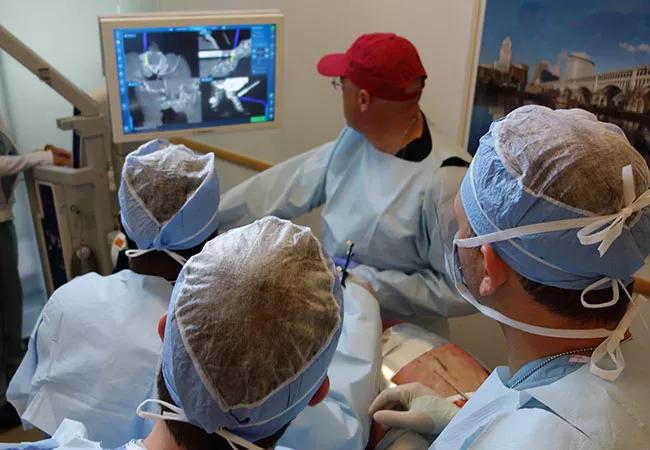
Image content: This image is available to view online.
View image online (https://assets.clevelandclinic.org/transform/2fb7e76e-5588-4642-9d59-add5844c5f0d/17-NEU-740-Benzel-650x450_jpg)
17-NEU-740-Benzel-650×450
“By far the best course I have attended.” “Truly one-of-a-kind.” “Great conference and social events.”
Advertisement
Cleveland Clinic is a non-profit academic medical center. Advertising on our site helps support our mission. We do not endorse non-Cleveland Clinic products or services. Policy
Those are verbatim evaluation comments from past attendees of Cleveland Clinic’s long-running intensive CME course, Cleveland Spine Review: Hands-On. The 2017 installment of this popular offering from the Cleveland Clinic Center for Spine Health runs from Wednesday, July 12, through Tuesday, July 18, at Cleveland Clinic Lutheran Hospital (just west of downtown Cleveland), with lodging at the Hyatt Regency Cleveland Hotel.
Below are six reasons providers — including neurosurgeons, orthopaedic surgeons, medical spine specialists and advanced practice providers — should attend. Full details and registration are available at ccfcme.org/spinereview17.
1) A comprehensive, intensive curriculum. Emphasis is given to the fundamentals of spine surgery (especially biomechanical considerations) and the surgery decision-making process, but the weeklong program also allows for a deep dive into a rich array of subtopics in spine care. “We’ll explore everything from the multiple adjuncts to surgery to minimally invasive surgical techniques to spinal implants (from multiple vendors) to dissection tools,” says Cleveland Spine Review founder and Cleveland Clinic neurosurgeon Edward Benzel, MD, one of seven course co-directors. “And nonoperative strategies are emphasized as well.”
2) A serious devotion to “hands-on.” The course is true to its name by pairing its didactic lectures with eight dedicated hands-on sessions in the cadaver laboratory. The lab sessions give participants exposure to complex surgical strategies in all regions of the spine and to a range of procedures including occipitocervical, cervical, thoracic and lumbar fixation techniques.
Advertisement
3) Ample time for discussion and problem-based learning. Participant questions are highly encouraged throughout all portions of the course, and significant time is dedicated to operative indication discussions. “We introduce and emphasize the problem-based decision-making process in these highly interactive discussions,” explains Dr. Benzel. “And participants are actively urged to bring cases for discussion during our interactive small-group case presentations.”
4) An extensive faculty from across the nation and the globe. Half of the course’s faculty of 50 spine experts are from (or trained at) Cleveland Clinic, with the remaining half hailing from states ranging from Connecticut to California or from celebrated international centers in Europe, South America and the Middle East. All are charged with sharing their expertise in the course’s collegial atmosphere. “Everyone was friendly and did not mind explaining or talking to you,” testified one past participant in an evaluation comment.
5) A focus on more than surgery. From a special session for medical spine specialists, nurses and physician assistants at the start of the course on July 12 to a variety of dedicated breakout sessions and a dedicated cadaver station, the course offers a unique opportunity for clinicians in those roles to learn side by side with their surgical colleagues.
6) Return of “Management of Spine Tumors.” This popular series of didactic lectures on spine tumor management is back this year. Offered over a day and a half before the main course (all day Tuesday, July 11, and in the morning of Wednesday, July 12), these lectures may be attended separate from or in addition to the main course.
Advertisement
If that’s not enough, the full program is CME-certified and Cleveland Spine Review is known for its superb social functions. “The social activities were a great way to unwind from the intense day,” observed one past participant.
This activity has been approved for AMA PRA Category 1 Credit™.
Advertisement
Advertisement

New study advances understanding of patient-defined goals
Testing options and therapies are expanding for this poorly understood sleep disorder
Real-world claims data and tissue culture studies set the stage for randomized clinical testing
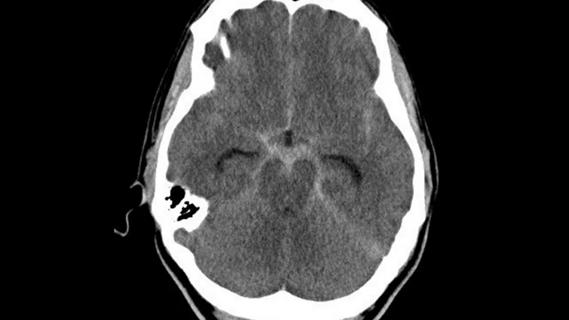
Digital subtraction angiography remains central to assessment of ‘benign’ PMSAH

Cleveland Clinic neuromuscular specialist shares insights on AI in his field and beyond
Findings challenge dogma that microglia are exclusively destructive regardless of location in brain

Neurology is especially well positioned for opportunities to enhance clinical care and medical training
New review distills insights from studies over the past decade
 Search