Locations:





Post-hoc analysis follows from STAMPEDE trial
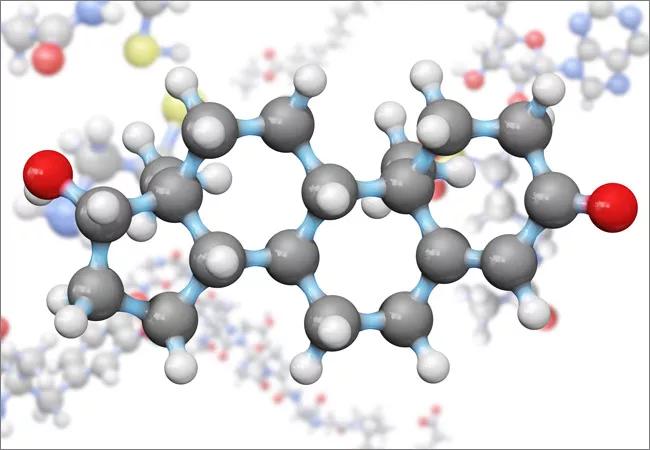
Image content: This image is available to view online.
View image online (https://assets.clevelandclinic.org/transform/06b50bf2-8cf6-4f93-b2ac-4ff6b55a46ae/testosterone-molecule_650x450-002_jpg)
testosterone-molecule_650x450 (002)
Obesity and poorly controlled type 2 diabetes carry grave risks for most patients. In addition to the increase in cardiovascular and metabolic risks, for men, that combination can mean tiredness, low sex drive and irritability — the classic symptoms of low testosterone levels.
Advertisement
Cleveland Clinic is a non-profit academic medical center. Advertising on our site helps support our mission. We do not endorse non-Cleveland Clinic products or services. Policy
“Oftentimes, the doctor will say lose weight,” says Sangeeta Kashyap, MD, “but it’s hard. You need to lose at least 15 percent body weight to get a rise in testosterone. That’s challenging when average weight loss with diet and exercise is only 3-5 percent, and only 8-12 percent with weight loss meds.”
“With bariatric surgery,” she says, “we see 20-25 percent weight loss sustained over time.” Dr. Kashyap and Cleveland Clinic colleagues from the Department of Endocrinology, Diabetes and Metabolism and the Bariatric and Metabolic Institute have just published a paper in Obesity Surgery documenting the benefits of bariatric surgery on testosterone levels in this patient population.
This post-hoc analysis follows from their STAMPEDE trial, which looked at five-year outcomes in obese patients with poorly controlled type 2 diabetes who had been randomized to intensive medical therapy (IMT) or bariatric surgery (BS) for diabetes treatment.
The subset analysis looked at male patients who had completed follow-up and had blood samples taken at baseline and five years. Of the 32 men, 24 had been randomized to BS and eight had received IMT. Averages at baseline were: age, 51.7 years; BMI, 36.7 kg/m2; HbA1c, 9.6 percent; total testosterone, 310 ng/dL; and free testosterone, 9.1 ng/dL. Only leptin levels differed significantly at baseline (10.3 ng/mL for IMT versus 17.9 ng/mL for BS, p=0.041).
At five years, the percent increase in total testosterone was 84.1 percent for the BS group compared to 9.6 percent for the IMT group (p=0.008); the percent increase in free testosterone was 47.4 percent versus −2.2 percent (p=0.013). Additionally, men who had undergone surgery had greater percent reductions compared to men on IMT in three key measures: body weight, −19.9 percent versus −3.9 percent (p<0.001); HbA1c, −25.1 percent versus −0.4 percent (p=0.017); and leptin levels, −50.9 percent versus 7.0 percent (p=0.037). All patients experienced an incremental percent increase in luteinizing hormone (35.6 percent) and an incremental decrease in high-sensitivity CRP (−46.4 percent) with no significant difference between the two groups.
Advertisement
Overall, 17 men experienced >15 percent weight loss and had greater increases in total testosterone (210 ng/dL versus 86 ng/dL, p=0.040) but not in free testosterone (3.8 ng/dL versus 0.42 ng/dL, p=0.093) compared to men who had <15 percent weight loss. The authors conclude that these increases after bariatric surgery—nearly 100 percent in total testosterone and nearly 50 percent in free testosterone—are more prominent than those previously reported and may lead to multiple benefits previously under-recognized, including increased libido.
“Our study shows that men can enjoy the benefits of higher testosterone levels—more active lifestyles, improved fertility, higher quality of life overall—for at least five years after these surgeries,” says Dr. Kashyap.
Advertisement
Advertisement
Radiofrequency ablation significantly reduces symptom severity, shrinks nodules

Maternal-fetal medicine specialists, endocrinologists and educators team up

Giving young patients a hand as they take charge of their own health

Case illustrates how easily condition can mimic preeclampsia
Analysis examines surgical resection of rare pituitary tumors
Screening and medication key to better outcomes
Spinal cord stimulation can help those who are optimized for success
Incidence, outcomes and management
 Search