Locations:





World experts offer a deep dive into a highly prevalent disease
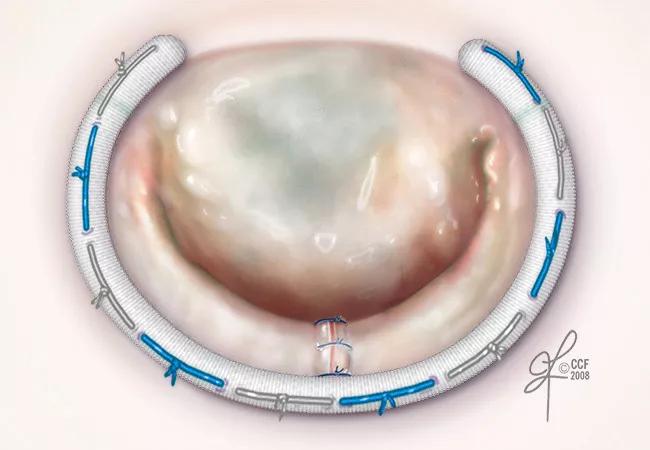
Image content: This image is available to view online.
View image online (https://assets.clevelandclinic.org/transform/5dc4292d-7207-42d9-b95b-31977e56488d/17-HRT-3912-Mitral-Valve-CQD_jpg)
Attending ‘Mastering the Mitral Valve’ in NYC Dec. 1-2
When Cleveland Clinic convenes its first-ever “Mastering the Mitral Valve” CME course in New York City in early December, it will be one of the most deep-diving CME explorations of mitral valve disease offered anywhere to date.
Advertisement
Cleveland Clinic is a non-profit academic medical center. Advertising on our site helps support our mission. We do not endorse non-Cleveland Clinic products or services. Policy
“This course will drill down into a wide range of specific questions related to mitral valve disease, particularly from the standpoint of enhancing clinical decision-making in a variety of situations,” says course co-director Brian Griffin, MD, Head of Cardiovascular Imaging at Cleveland Clinic.
“Proper management of mitral valve disease can be complex,” adds course co-director A. Marc Gillinov, MD, Chairman of Cardiothoracic Surgery at Cleveland Clinic. “In this course, we emphasize appropriate timing for intervention and the most successful techniques for restoring mitral valve function. Understanding these key principles restores patients to full function and, in the case of mitral valve prolapse, provides a normal life expectancy.”
The 1.5-day event will be held at JW Marriott Essex House New York at 160 Central Park South on Friday-Saturday, Dec. 1-2 (see ccfcme.org/mitralmasters for details and registration). Here are five big reasons the course is stirring interest among its target audience of cardiothoracic surgeons, cardiologists, internists and midlevel providers specializing in cardiovascular care.
About 5 percent of the U.S. population has some degree of mitral valve disease, notes Dr. Griffin. “It’s something we’ve become much more aware of in recent years,” he says. “Understanding of this topic has really grown and there is much that’s new and highly relevant to cardiovascular practice, even for the general cardiologist.”
The course’s six topical sessions take a soup-to-nuts approach to mitral valve disease, starting with anatomy and imaging and ending with transcatheter repair and replacement. In between are comprehensive sessions devoted to various aspects of degenerative mitral regurgitation — when to operate, mitral valve repair and special situations — along with a session exploring issues in functional mitral regurgitation. Dr. Griffin says the various discussions around the timing of interventions are certain to be highlights.
Advertisement
That powerhouse course content will be delivered in an engaging way. All lectures will be sharply focused at 20 minutes or less, and each topical session concludes with audience Q&A. Centerpieces of the agenda will be three 30-minute pro/con debates on burning questions in mitral valve care:
Most of the course’s 20 expert faculty members are surgeons and cardiologists with Cleveland Clinic’s Miller Family Heart & Vascular Institute. They will be joined by superb guest faculty from Northwestern University, Brigham and Women’s Hospital, Northwell Health and other leading U.S. institutions. “Managing the mitral valve requires special knowledge and expertise,” notes Dr. Gillinov. “Our world-class experts from the nation’s busiest mitral valve centers will share their insights and expertise.”
What better time to be in New York? The venue’s location along Central Park puts attendees in the heart of the city. And adjournment times of 4:15 on Friday and noon on Saturday leave plenty of time for weekend sightseeing.
Just for good measure, Dr. Gillinov sums up the case for making time for this course in the 23-second video below. To register, visit ccfcme.org/mitralmasters.
Video content: This video is available to watch online.
View video online (https://www.youtube.com/embed/OP-3bEVJ59U?feature=oembed)
This activity has been approved for AMA PRA Category 1 credit™.
Advertisement
Advertisement
A sampling of outcome and volume data from our Heart & Vascular Institute
Concomitant AF ablation and LAA occlusion strongly endorsed during elective heart surgery
Large retrospective study supports its addition to BAV repair toolbox at expert centers
Young age, solid tumor, high uptake on PET and KRAS mutation signal risk, suggest need for lobectomy
Surprise findings argue for caution about testosterone use in men at risk for fracture
Residual AR related to severe preoperative AR increases risk of progression, need for reoperation

Findings support emphasis on markers of frailty related to, but not dependent on, age
Provides option for patients previously deemed anatomically unsuitable
 Search