Locations:





When a patient’s and a program’s 30-year anniversaries intersect
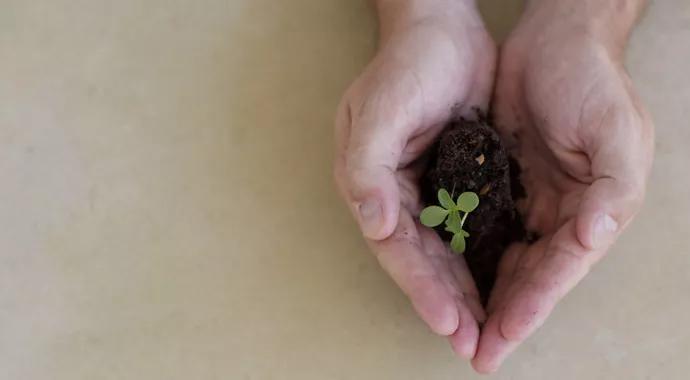
Image content: This image is available to view online.
View image online (https://assets.clevelandclinic.org/transform/efd25a1d-dd1b-44a4-9c05-e318ed753cb3/30Transplant-690x380_jpg)
30Transplant-690×380
John of Detroit considers it luck that his 16-year, multi-continental journey to heart health eventually brought him to Cleveland Clinic’s then-new cardiac transplant program 30 years ago.
Advertisement
Cleveland Clinic is a non-profit academic medical center. Advertising on our site helps support our mission. We do not endorse non-Cleveland Clinic products or services. Policy
John (a pseudonym to protect his privacy) was 9 when he developed rheumatic fever in his home city of Beirut, Lebanon. A lack of proper treatment left him with pain in his joints, weight gain and what he recalls as a “messed-up hormonal system.” By age 12, his aortic valve was damaged and he needed a heart replacement, but that kind of medical care was not available in his country at the time.
Doctors managed his disease until he was 18, when he traveled to Paris to undergo aortic valve replacement surgery.
John says it was luck that brought him to Cleveland Clinic several years later. Two months shy of graduating from Wayne State University in Detroit with a master’s degree in industrial engineering, he began experiencing chest discomfort, lack of energy and a racing heartbeat. When he showed up at a Detroit-area hospital, he was turned away for lack of insurance.
That same day, a family friend drove him through heavy snow to Cleveland Clinic, where he was diagnosed with cardiomyopathy and told he needed a new heart. On his 25th birthday, a match was found from a deceased 24-year-old man and John became the 11th recipient of a heart transplant through Cleveland Clinic’s heart transplant program, which had been launched the prior year, in 1984.
“I still think about that donor today, even though I never met him,” John says.
After the transplant, John’s life gradually returned to normal. He married seven years later and had two children. Now 55, he still visits Cleveland Clinic every six months for checkups and jokes that he has outlasted three physicians.
Advertisement
“Before the trip to Cleveland, I was silently expecting to die,” he remembers. “Even after going to Cleveland Clinic and undergoing the surgery, I was worried about my life expectancy. I broke up with my fiancée because I thought I’d never have a normal life.”
In the 30 years since John’s transplant, Cleveland Clinic has performed an additional 1,700 heart transplants, growing to become the fifth-largest heart transplant program in the nation and the largest in Ohio.
The program achieved survival rates of 90 percent, 79 percent and 59 percent at one, five and 10 years, respectively, in the most recent outcomes reporting period.
Heart transplant outcomes have indeed improved worldwide in the three decades since Cleveland Clinic launched its heart transplant program and John received his new heart.
Those improvements stem from a number of factors, according to Randall Starling, MD, MPH, Head of Heart Failure and Cardiac Transplantation Medicine at Cleveland Clinic. These include selection of more appropriate candidates and donors, improvements in pretransplant supportive care and better protection from infection.
Particularly important has been the development of new immunosuppressive medications over the past 10 to 15 years. These medications resulted in major improvements in survival and allowed patients to be treated with lower doses of steroids or to go completely off steroids, notes Dr. Starling. This, in turn, reduced complications following transplant surgery.
One thing certainly hasn’t changed between the time of John’s experience as Cleveland Clinic’s 11th heart transplant case and its 1,711th case in recent months: the life-changing ramifications of the procedure.
Advertisement
“The transplant really changed my life prospects,” John reflects. “I felt that I was born again. Without the transplant I would not have achieved anything and would have died at 25.”
Advertisement
Advertisement
A sampling of outcome and volume data from our Heart & Vascular Institute
Concomitant AF ablation and LAA occlusion strongly endorsed during elective heart surgery
Large retrospective study supports its addition to BAV repair toolbox at expert centers
Young age, solid tumor, high uptake on PET and KRAS mutation signal risk, suggest need for lobectomy
Surprise findings argue for caution about testosterone use in men at risk for fracture
Residual AR related to severe preoperative AR increases risk of progression, need for reoperation
Findings support emphasis on markers of frailty related to, but not dependent on, age
Provides option for patients previously deemed anatomically unsuitable
 Search