Locations:





 Search
Open source software program has clinical and surgical applications
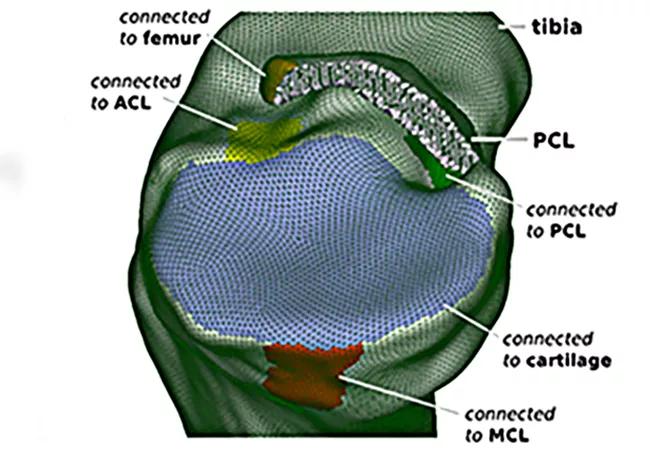
Image content: This image is available to view online.
View image online (https://assets.clevelandclinic.org/transform/337383d7-573e-4811-998f-66adf3db2076/19-LRI-5525-CQD-Hero-Image-650x450_jpg)
19-LRI-5525-CQD-Hero-Image-650×450
Ahmet Erdemir, PhD, staff in the Department of Biomedical Engineering, Lerner Research Institute, has received a four-year, $3.5 million grant from the National Institute of Biomedical Imaging and Bioengineering (part of the National Institutes of Health) to develop a software suite that will allow the annotation of virtual anatomy.
Advertisement
Cleveland Clinic is a non-profit academic medical center. Advertising on our site helps support our mission. We do not endorse non-Cleveland Clinic products or services. Policy
Virtual anatomy, a three-dimensional, interactive rendering of the human anatomy, is widely used in medical schools and in clinical and biomedical engineering applications. This comprehensive software package will enable doctors and researchers to better describe the relationships and interactions between organs and to label symptoms that will help in the diagnosis of illness, as a way to augment the virtual representations of the anatomy that are increasingly relied upon in computational modeling and simulation.
The software, called AEVA (Annotation and Exchange of Virtual Anatomy), will have applications in medicine (for example, to help a doctor plan a patient’s care or surgery) and in biomedical engineering (to create a therapy or medical device). Other potential uses include helping in the understanding of physiological function, evaluating injury risk and predicting the outcome of a medical or surgical intervention. As a general purpose computational anatomy software, the package responds to emerging requirements of embedding large amount of data on the anatomy while making it accessible for variety of users.
The proposed software package will comprise three arms: a multi-platform software library; user interfaces to support data exchange, and; sample cases involving three human anatomy systems to demonstrate the software’s applicability to clinical and biomedical practice. The development and distribution of the software will rely on free and open source practices to empower the community at large.
Advertisement
The project is a joint effort for software design, development and testing between Cleveland Clinic and Kitware, Inc., a software development company based in Clifton Park, New York. Dr. Erdemir has also established an advisory board of Cleveland Clinic staff to provide insight on the anticipated use of the proposed software. Members of the Advisory Board include co-investigators Richard Drake, PhD, Director of Anatomy in the Cleveland Clinic Lerner College of Medicine; William Dupps, MD, PhD, Cole Eye Institute; Linda Graham, MD, Lerner Research Institute; Morgan Jones, MD, Orthopaedic & Rheumatology Institute; and Joshua Polster, MD, Imaging Institute.
“I am very excited about this collaborative project,” says Dr. Erdemir. “It will be a foundational platform at the heart of computational modeling, clinical evaluation of anatomy, medical training and data consolidation.”
Story adapted from LRI News
Advertisement
Advertisement


International collaboration is most genetically diverse study of the disease to date

Preclinical work promises large-scale data with minimal bias to inform development of clinical tests

Matching SNOMED Term with Curated Post. Please do not touch this post or any of its categories/snomed terms, thank you!

Matching Primary -> Secondary SNOMED Term with Curated Post. Please do not touch this post or any of its categories/snomed terms, thank you!

Cleveland Clinic researchers pursue answers on basic science and clinical fronts

Study suggests sex-specific pathways show potential for sex-specific therapeutic approaches

Cleveland Clinic launches Quantum Innovation Catalyzer Program to help start-up companies access advanced research technology